

CEDAR RAPIDS, Iowa — More details have been uncovered about U.S. Department of Homeland Security plans to install fencing in an area where advocates have been peaceably gathering outside of the U.S. Immigration and Customs Enforcement Office.
Plans call for approximately 350 linear feet of new 10-foot-high galvanized fencing with privacy netting to the northwest side, and about 275 linear feet of new 7-foot-high galvanized chain-link fence in front of the Cedar Rapids ICE office at 3351 Square D Dr. SW.
Additionally, approximately 400 linear feet of existing fencing will have privacy netting installed, and the existing front gate will become slightly more prominent, according to documents from the DHS to the city of Cedar Rapids. A small section of existing fence will remain unchanged.
A site plan shows fencing around the entire perimeter of the location.
More: See photos from a protest at the Cedar Rapids ICE office
Footers for the new fencing sections will be laid roughly every eight feet, with a roughly 40-inch-wide and 36- to 48-inch-deep area of disturbance. The documents did not indicate what will happen to shade trees at the site.
Advocates who accompany immigrants to their check-ins with ICE have been gathering outside of the office to provide support for those individuals, and to demonstrate against mass deportations and ICE actions that led to the deaths of two American citizens, as well as others.
Last fall, the advocacy group Escucha Mi Voz Iowa, along with other faith-based groups, pushed back on plans for ICE to build a 7-foot-high fence, seen as an effort to silence peaceful protesters and diminish transparency. Demonstrators typically hold signs and speak out against ICE actions at the site, and no disturbances have been reported during those events.
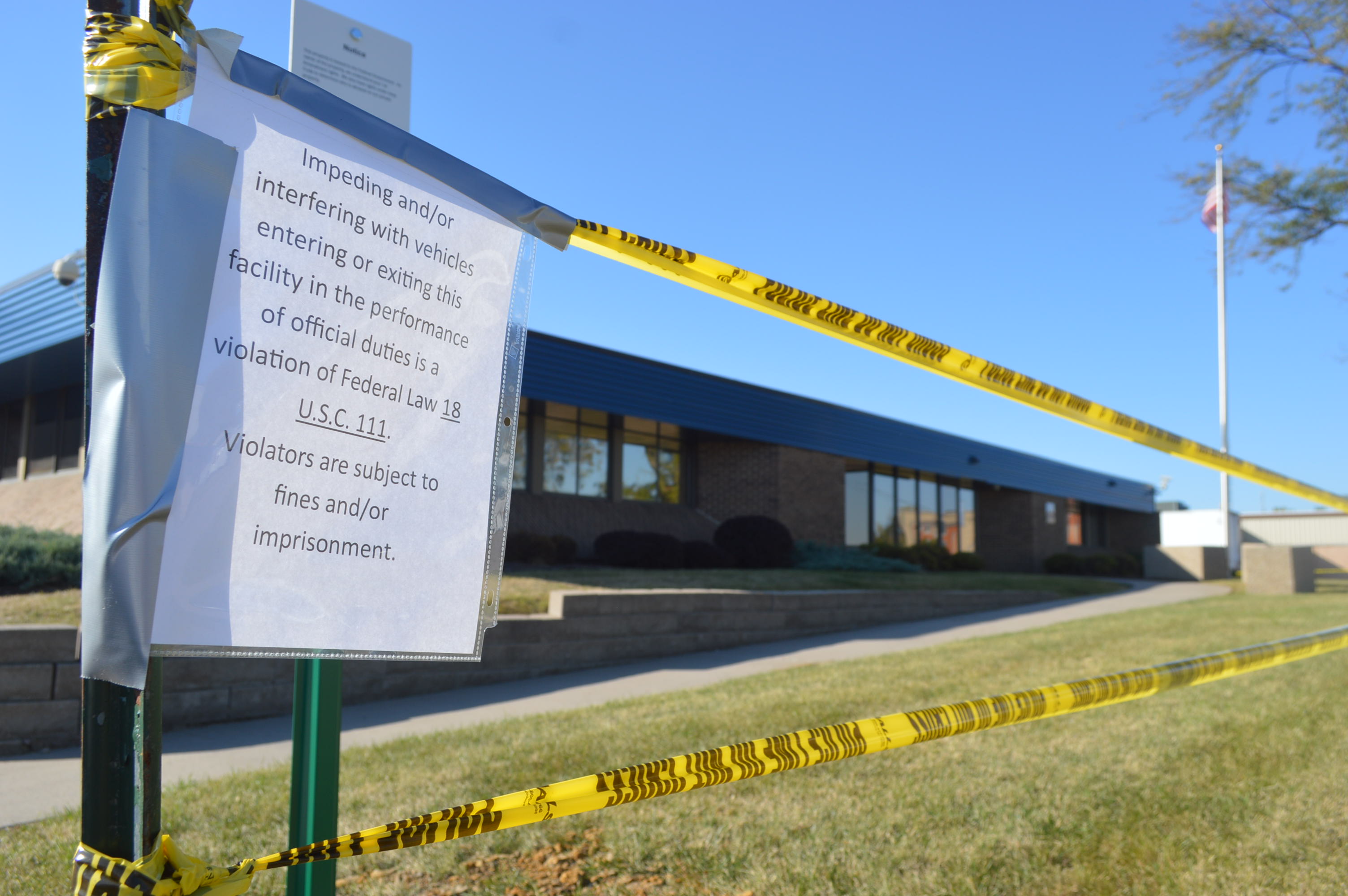
Yellow tape cordons off the area around the Cedar Rapids ICE office, with a warning sign, in October 2025. (photo/Cindy Hadish)
Related: See photos from a Cedar Rapids ICE protest in January
Since then, yellow tape has cordoned off the area in front of the building, but the documents to the city offer more details, and indicate that plans to build the fence are proceeding.
The letter from Gabrielle Fernandez, environmental protection specialist in the DHS Office of the Chief Readiness Support Officer, was submitted as part of the Section 106 process, which requires federal agencies to consider the effects of their projects on historic properties.
Built in 1975, with later additions, the ICE office was originally a low mid-century modern
brick office structure with low-hanging eaves. Those later additions, however, destroyed any integrity of design, materials, workmanship and other criteria that can make a building eligible for the National Register of Historic Places, according to ICE, which determined the property is ineligible for listing.
The letter also noted that ICE does not recommend any further archaeological assessment of the project area.
Still, under the Section 106 review, the city’s Historic Preservation Commission (HPC) is invited to comment on the undertaking.
See photos from an ICE legal observer training in Cedar Rapids
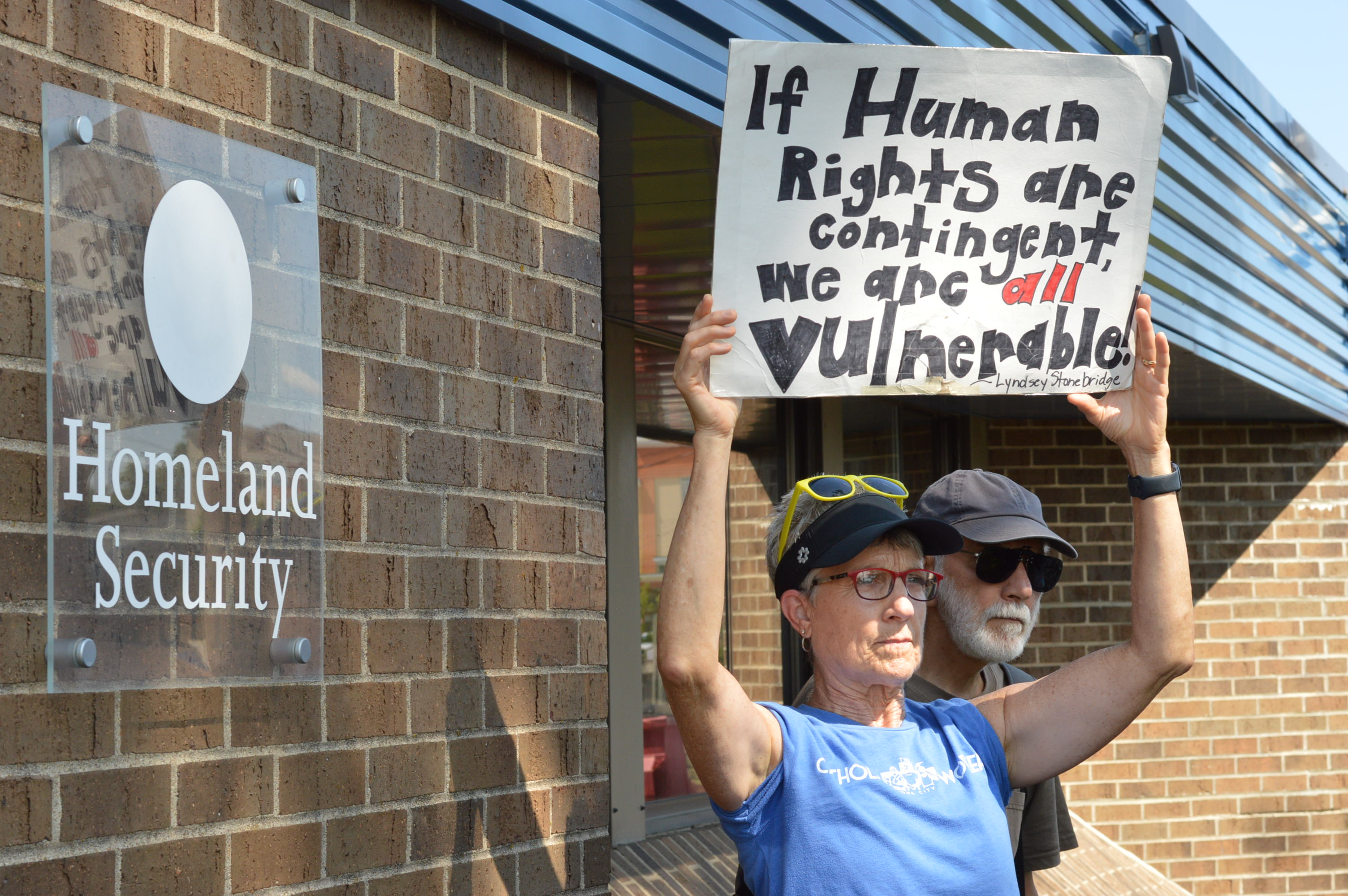
Demonstrators hold signs outside of the Cedar Rapids, Iowa, ICE office in July 2025. (photo/Cindy Hadish)
The commission will consider the ICE plans at its meeting at 4:30 p.m. Thursday, Feb. 26, 2026, in the Five Seasons Conference Room at the City Services Center, 500 15th Ave. SW.
Public comment is taken at the beginning of the meetings. For members of the public who would like to join virtually, a registration form must be submitted. A link to the form can be found on the HPC agenda.
In October, after hearing concerns at City Council meetings about a permit offered to the Department of Homeland Security to erect a fence, city officials said they were correcting a mapping “anomaly” to no longer require that permit.
At the time, Escucha Mi Voz Iowa responded by issuing a statement, calling out the city for “bending over backwards to give ICE and Homeland Security the fence they want to hide deportations instead of standing up to protect and defend the city’s own residents.”
The city’s sudden change undermines First Amendment and religious-freedom activities and signals that local leaders are willing to serve federal deportation interests over community well-being, the group said.
Elsewhere in Cedar Rapids, demonstrations have been held against ICE and hundreds gathered last month to undergo legal observer training at a Cedar Rapids church, to understand their legal rights and peaceful ways to observe ICE interactions.
See maps of the boundaries and more about the city’s changes.
.
No Comments Yet