
By Cindy Hadish
CEDAR RAPIDS, Iowa — The images are haunting.
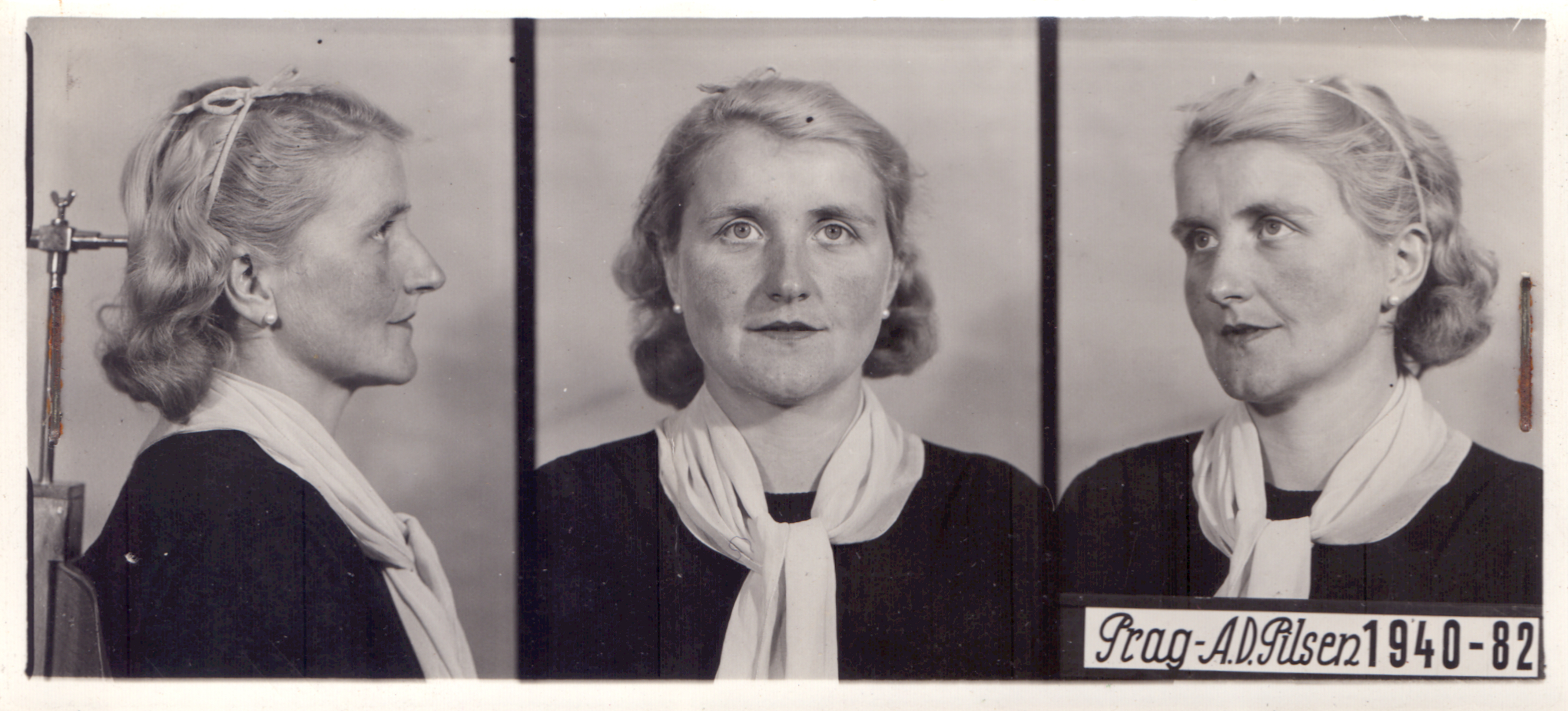
A devoted mother, happily holding her children. The same confidant-looking woman, dressed in stylish clothes. Her mugshots, taken at a Nazi prison, and the guillotine that cut her life short.
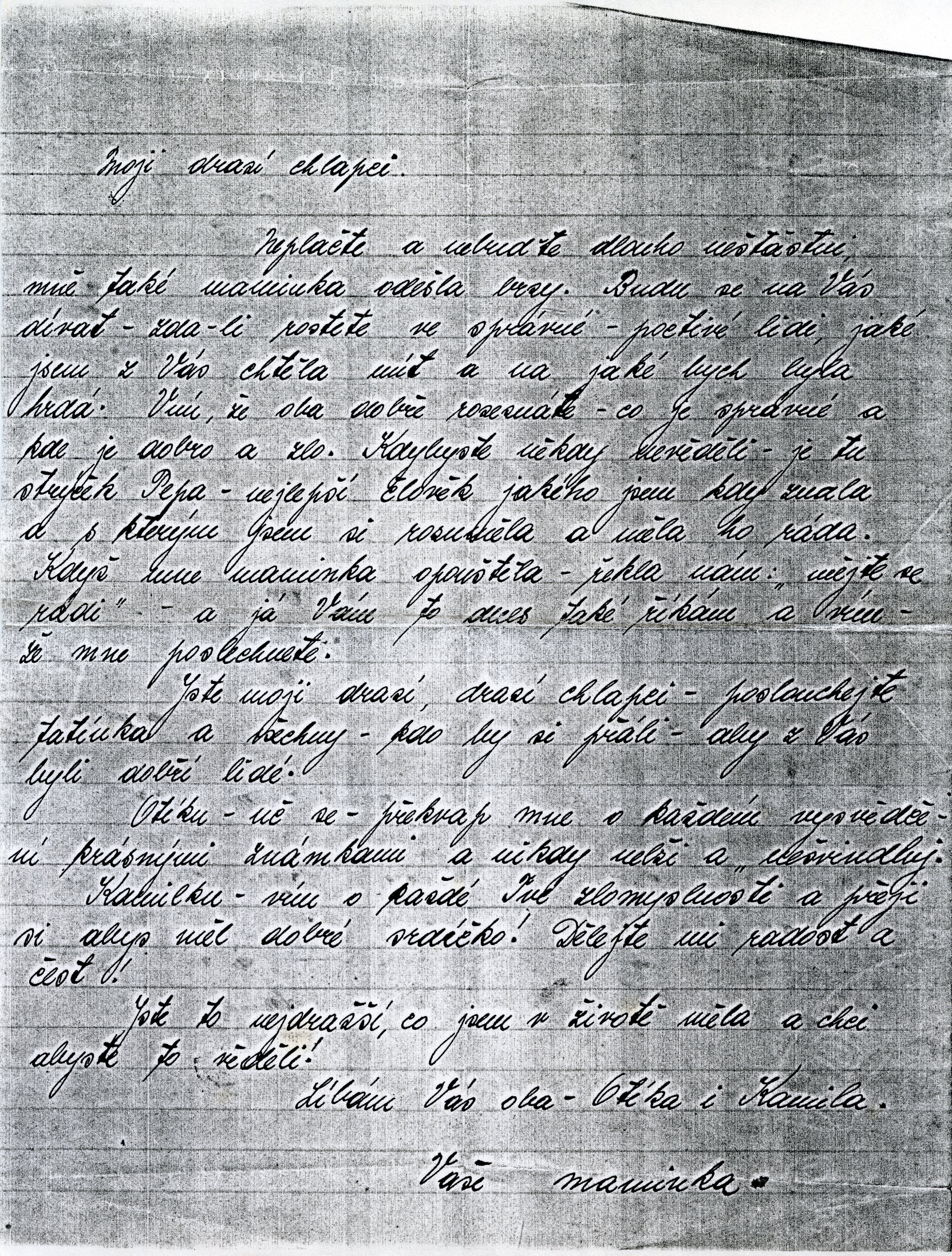
The words Miloslava Gschwindová penned from prison are equally heartbreaking, particularly letters addressed to her two young sons.
Those letters, photos and more offer insight into the life of Gschwindová, a Czech resistance fighter who was executed by guillotine September 4, 1942, at age 38.
Her name is largely absent from accounts of World War II resistance fighters, and the story of
Gschwindová’s life and ultimate fate could have been lost to history if not for her granddaughter, who
donated materials from the grandmother she never knew to the National Czech & Slovak Museum &
Library in Cedar Rapids.
Now, those materials are the subject of a new exhibit, sponsored by Rick Martin and Kay Birnbaum, that will be unveiled at 5:30 p.m. Tuesday, Sept. 15, 2026, at the museum, 1400 Inspiration Place SW. The exhibit opening is free.
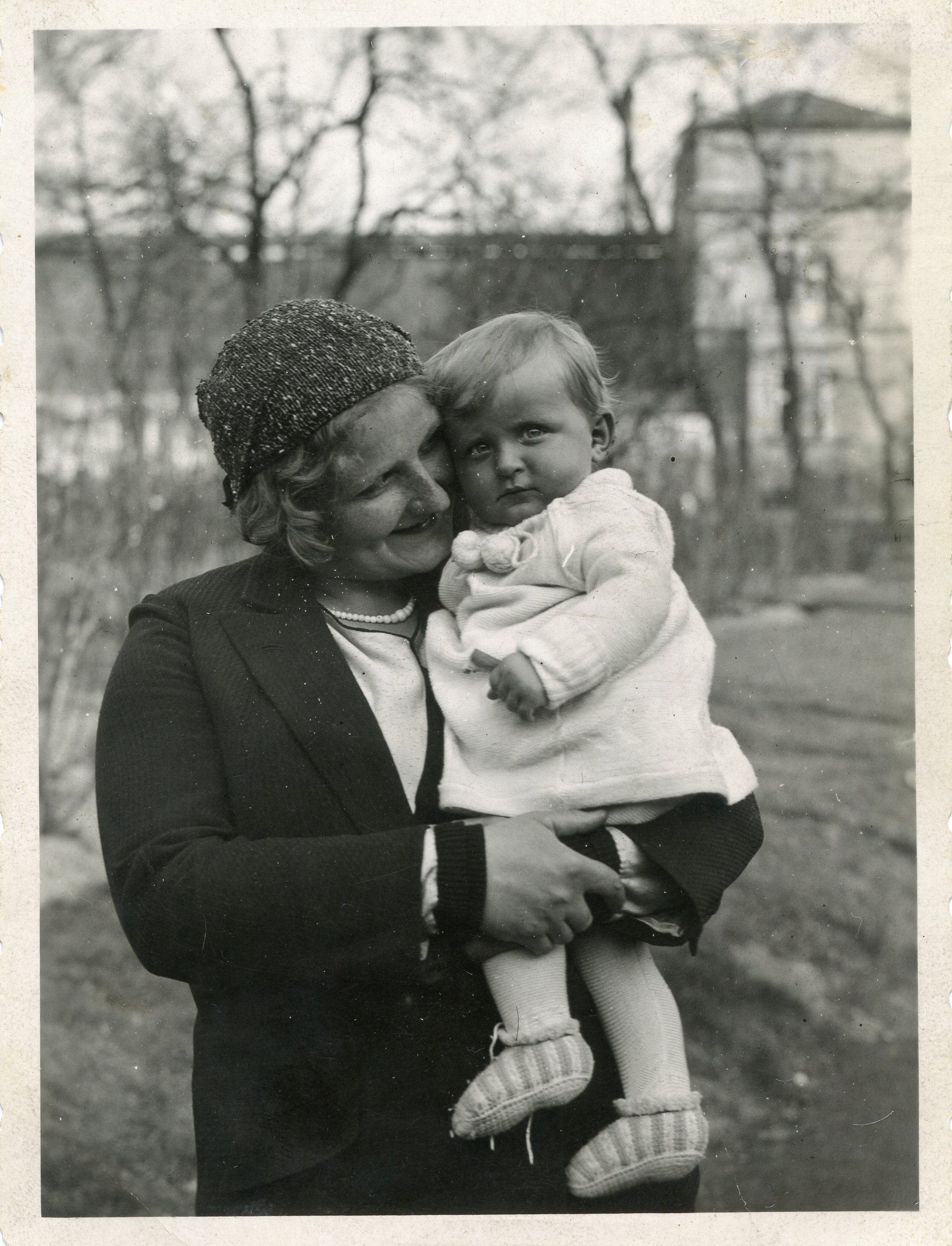
Mila, as she was known to her family, holding her son, Kamil. Photo/ NCSML Archives
Additionally, a panel presentation centered around the archived materials will take place from 1 to 2:30 p.m. Wednesday, Sept. 16, during the museum’s three-day History and Culture Conference. Registration is required to attend the conference. Single-day registration is also available.
Rick Martin, former development coordinator of the National Czech & Slovak Museum & Library, and Anna Tanalski, cataloging and special collections librarian, will be joined on the panel by Colette Gschwind — a Cleveland musician and Gschwindová’s granddaughter — who donated the materials.
Her father – Gschwindová’s son, Kamil Gschwind — was just 11 when his mother was executed. He later escaped what was then Czechoslovakia under Communist rule in 1958 during a field trip to East Berlin,
crossing a bridge to West Berlin under fire from troops stationed there.
Kamil Gschwind made his way to the United States as an immigrant, becoming a successful architect in the Cleveland area.
The History and Culture Conference celebrates the rich legacy of Czech and Slovak immigrants in the United States and the lasting impact these communities have made on American society.
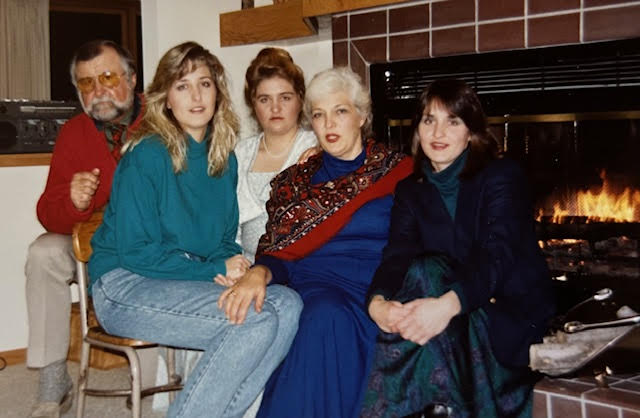
Colette Gschwind, at right, is shown with her parents and sisters in this family photo.
“He was determined to get out,” Colette told me during an interview. “He had a camera and the
suit on his back and that was it. He hated communism.”
As a journalist, I was brought in to write a paper telling Gschwindová’s story through the archived materials and other sources.
A stellar team contributed to the project, including Tanalski, Martin, Birnbaum and Gschwind, as well as Dalibor Mikuláš, Dave Muhlena and Trisha Spence.
Stefanie Kohn and Tricia Bender developed the museum exhibit.
Gschwind’s second cousin handed over the letters to the family almost as an afterthought as he ended a visit to the United States, but it turned out to be consequential.
The letters, written from various Nazi prisons, illustrated the concern Gschwindová held for her children and other family members, even after she was sentenced to death for the “treasonous crime” of writing anti-Nazi pamphlets.
“My dear ones, today I must share with you a sad news that, contrary to all expectations, on Wednesday, June 3, I was sentenced to death. Be brave, as I am, and hope as I hope, and I am kindly asking you to conceal this sad news from my father and my little Kamilek,” she wrote in one letter.
Another, to Kamil and his brother, was signed, “Váše maminka,” Czech for “Your mom” which I chose as the paper’s title, bringing the perspective of a mother into this momentous time in history.
Colette’s family was encouraged to burn the letters after her father’s death, but she made a choice to preserve them and later, to donate them, after meeting Martin and Cecilia Rokusek, museum president and CEO, during an event in 2022 at the Bohemian National Hall in Cleveland.
Without their foresight and preservation efforts, these important pieces of history would be lost to the past.
The exhibit can be seen at the National Czech & Slovak Museum & Library beginning Sept. 15, 2026.
No Comments Yet