
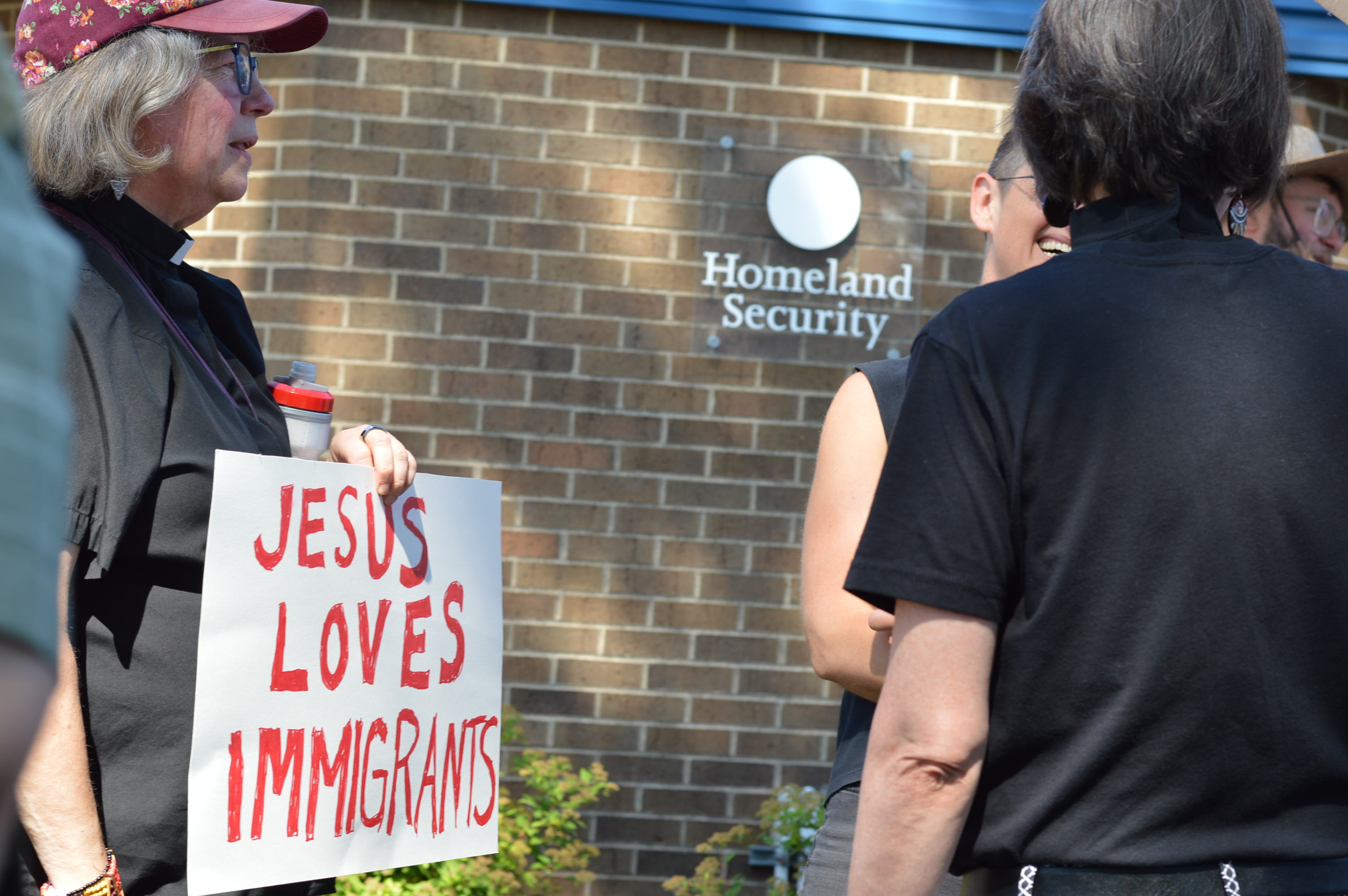
CEDAR RAPIDS, Iowa — Immigrant advocates made a last-ditch plea to a city commission to prevent a tall fence from being constructed outside of the U.S. Immigration and Customs Enforcement office in Cedar Rapids.
Though smaller in numbers than a previous effort last month, members of the public spoke out at the Cedar Rapids Historic Preservation Commission meeting on March 26, 2026, asking the commission to do what they can to block the fence from being installed at the U.S. Department of Homeland Security office, 3351 Square D Dr. SW.
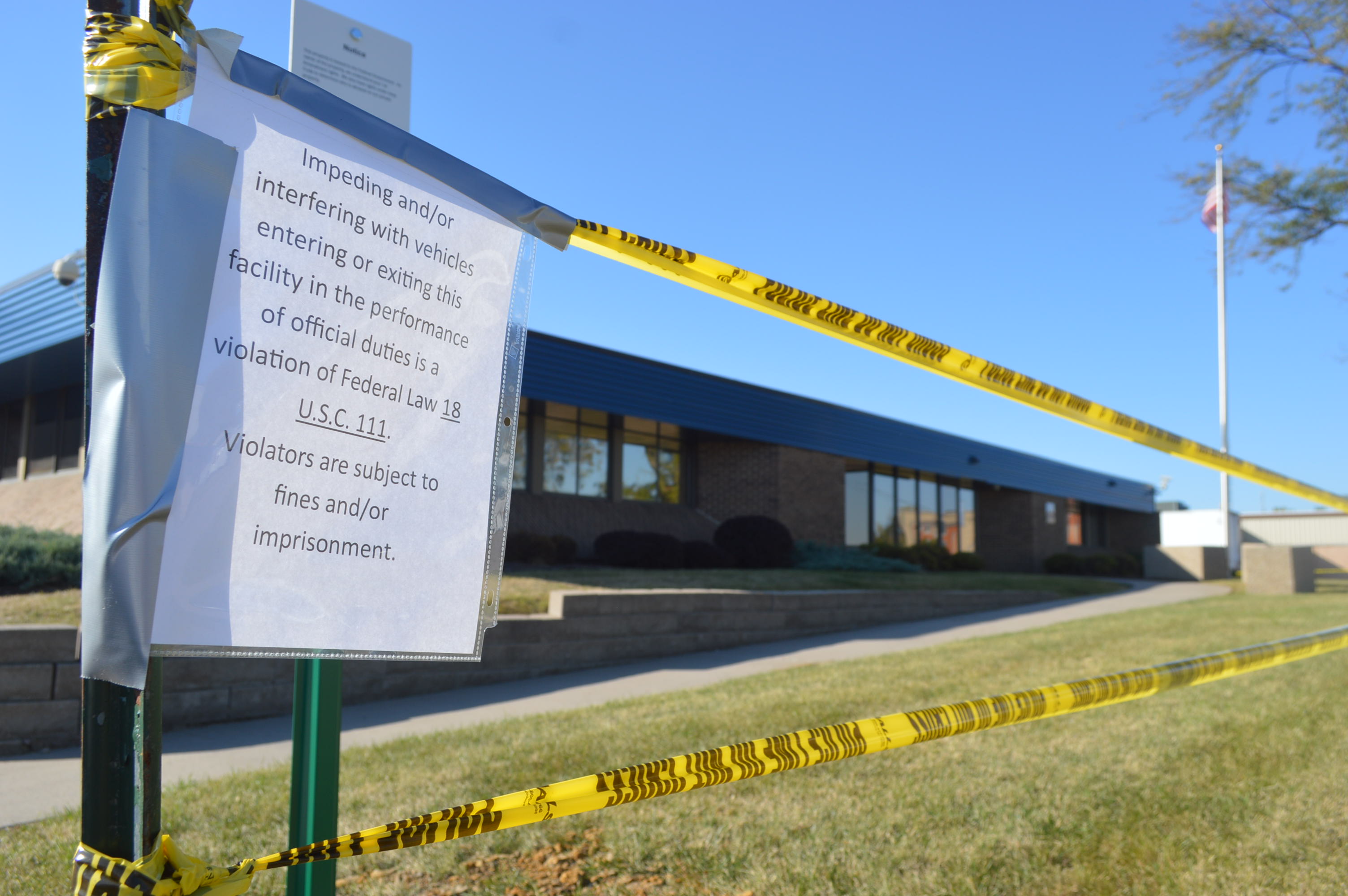
ICE officials plan to install 7- and 10-foot fencing around the office, which opponents say is meant to hide detentions and family separations from view and to undermine First Amendment and religious-freedom activities.
Related: ICE disregards Historic Preservation Commission
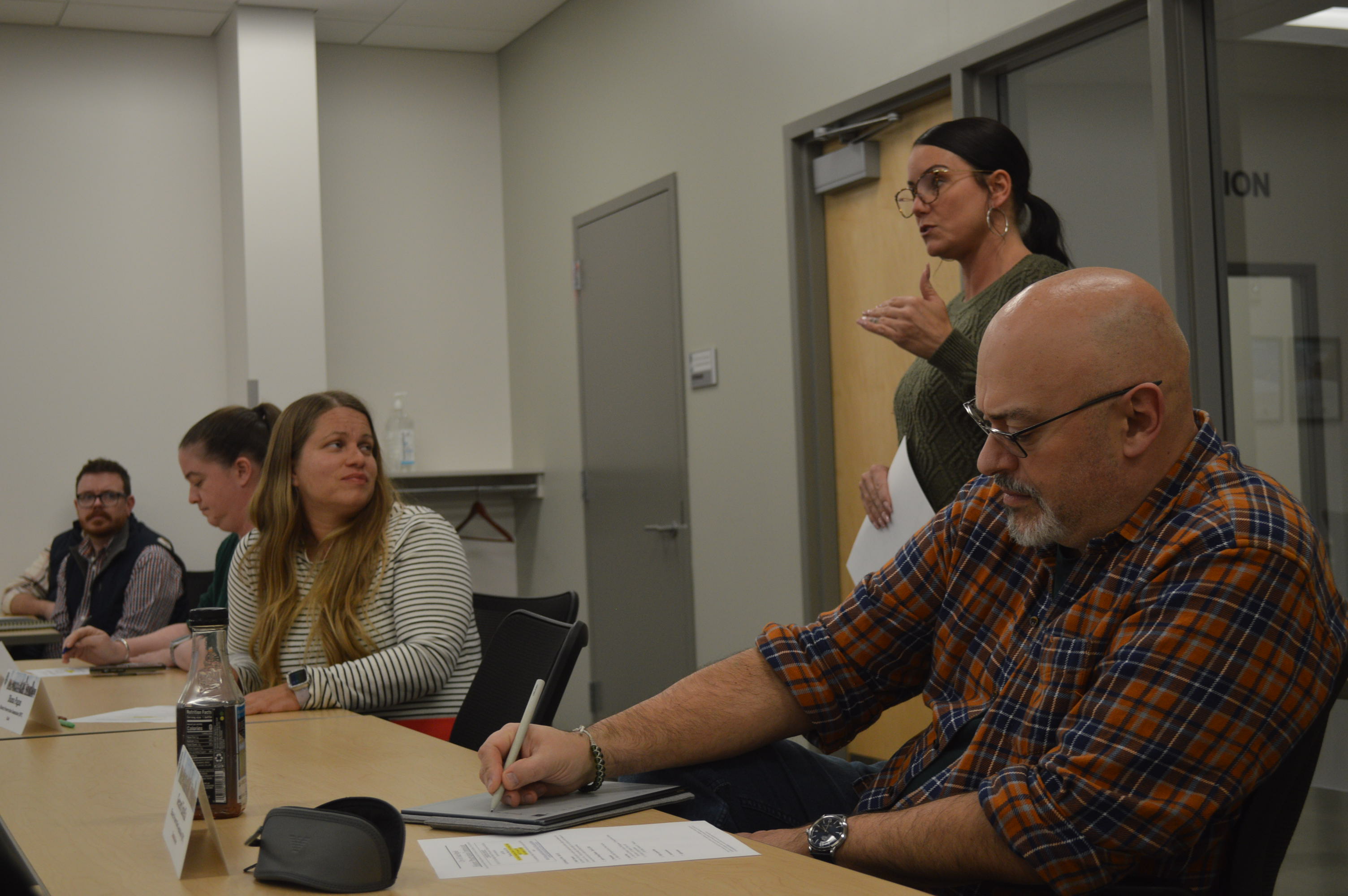
Annya Mari, standing, addresses the Cedar Rapids Historic Preservation Commission on March 26, 2026. (photo/Cindy Hadish)
Annya Mari, who regularly attends check-ins for immigrants meeting with ICE officials in Cedar Rapids, said the fence isn’t needed.
“There’s never been a threat towards (ICE). They’ve never been unsafe,” she said. “The fence is purely to block humanitarian aid.”
Mari predicted the fence would become an eyesore for southwest Cedar Rapids.
“I’m not saying I’m going to vandalize it, but people are angry,” she said. “There’s going to be swastikas sprayed painted on it. There’s going to be signs posted on it. It will get vandalized.”
Elsa Gustafson of Cedar Rapids referred to person-to-person communication that will be blocked if the fence is installed.
Some people going to ICE check-ins share contact information with the advocates who wait outside, she said, asking them to reach out to their loved ones if they don’t return from their appointment.
“For people arriving to these appointments, it’s pretty scary, ” Gustafson said. “And having a giant fence there, especially for the children who need to come to these appointments, that will make it even more intimidating.”
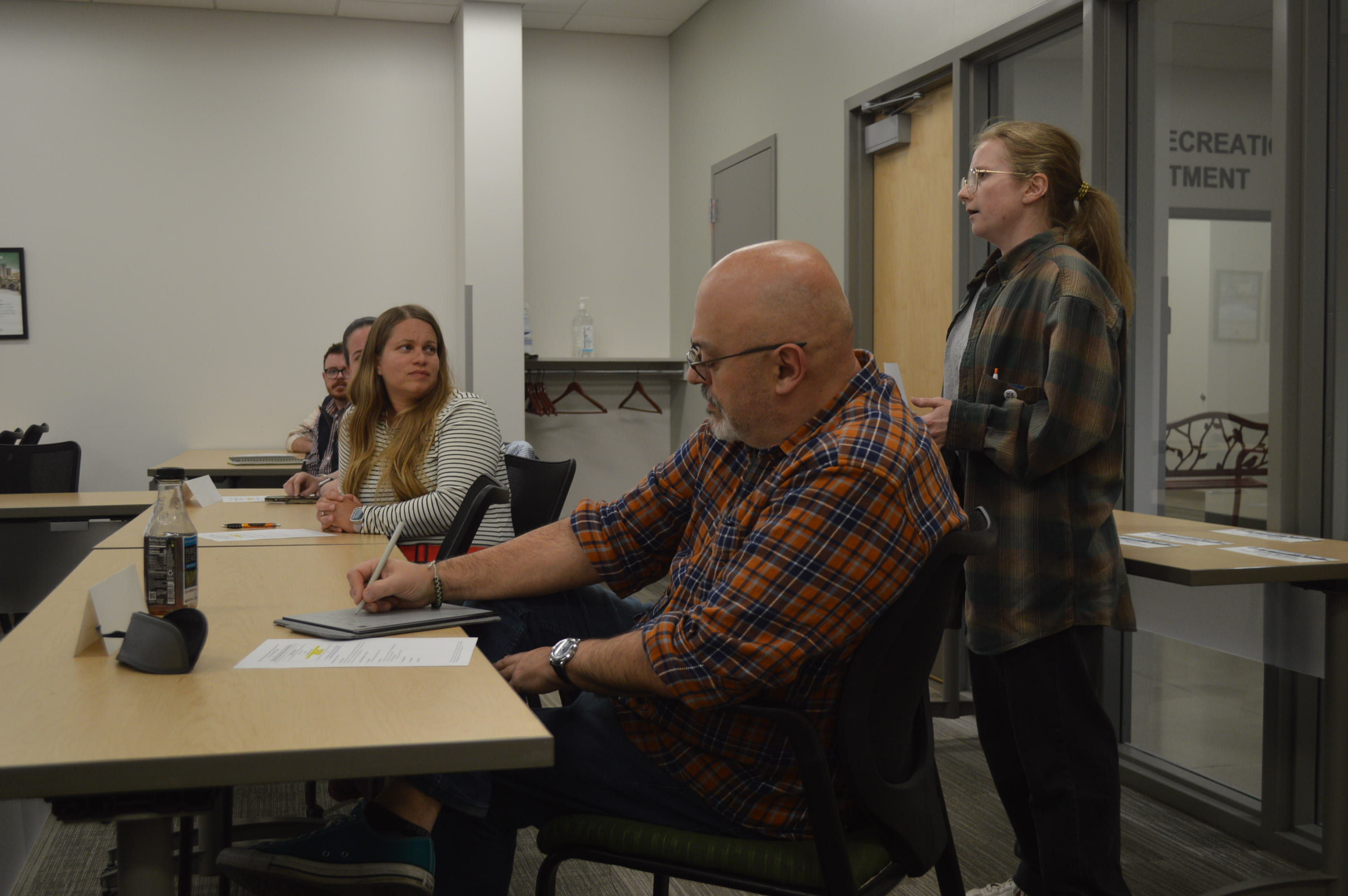
Historic Preservation Commission members listen to Elsa Gustafson during their March 26, 2026, meeting in Cedar Rapids, Iowa. (photo/Cindy Hadish)
As part of their role, the Historic Preservation Commission reviews demolition applications for buildings 50 years old and older, among other issues, but is also asked to comment on undertakings as part of the Section 106 process, which requires federal agencies to consider the effects of their projects on historic properties.
The commission previously responded to the federal department, noting that the fence would block the mid-century building designed by acclaimed Cedar Rapids architect Leo Peiffer. Built by 1976, the building could potentially qualify for the National Register of Historic Places, they said, also asking if a fence was needed, if it could be built at a shorter height.
During its Feb. 26 meeting, all but one of the commission members agreed that the building that houses the ICE office, the former Pepco headquarters, should be surveyed as potentially eligible for the National Register of Historic Places and that any fence should not obscure views of the building.
ICE officials responded to the commission’s comments by claiming the building is ineligible for the National Register of Historic Places due to a large addition constructed in the 1980s.
While ICE admitted that Peiffer was a well-known mid-century modern architect, they claimed the former Pepco office is not the “best representation” of his work, even as they cited one example that no longer exists.
“(O)ther notable examples of Peiffer’s work in Cedar Rapids include, but is not limited to, the
architects personal home, All Saints Catholic Church, and the Shorewood Restaurant,” a letter responding to the commission’s comments stated.
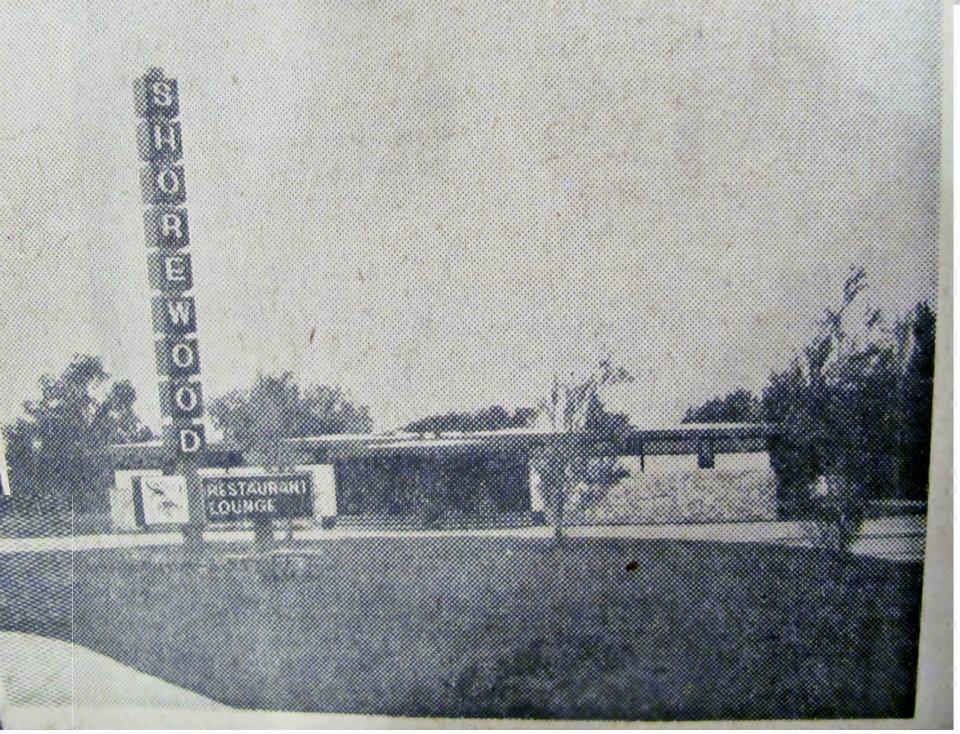
An image of the 1960’s-era Shorewood Restaurant, as shown on the Cedar Rapids History Facebook page.
The Shorewood Restaurant, located in the 1960s at 1900 Hwy. 150 — later Collins Road — was designed by Peiffer, but was demolished decades ago to make way for Highway 100.
Commission members Gerard Estella and Rachel Pothoff both questioned if the determination from ICE was made by a qualified historian, particularly given the gaffe in pointing out a building that no longer exists as a better example of Peiffer’s work.
“If a professional survey was done, I’d like to know who did this,” Pothoff said.
“Who did the vetting is the question,” Estella added. “If you’re pointing out that this is a better example and it doesn’t exist, that’s inaccurate.”
Commission member and architect Jacob Cournoyer pointed out another inaccuracy in the response from ICE that said a later addition destroyed the building’s historic integrity.
“They’re not visible from the streetside. They’re all at the back of the building,” Cournoyer said of the addition. “The mid-century modern architectural elements that were present in the original design are still intact and the addition did not affect those features.”
The commission will send its response to ICE, but city staff noted that federal authorities can proceed with the project regardless of any objections or requests from the commission.
More: Fence divides Historic Preservation Commission
No Comments Yet