
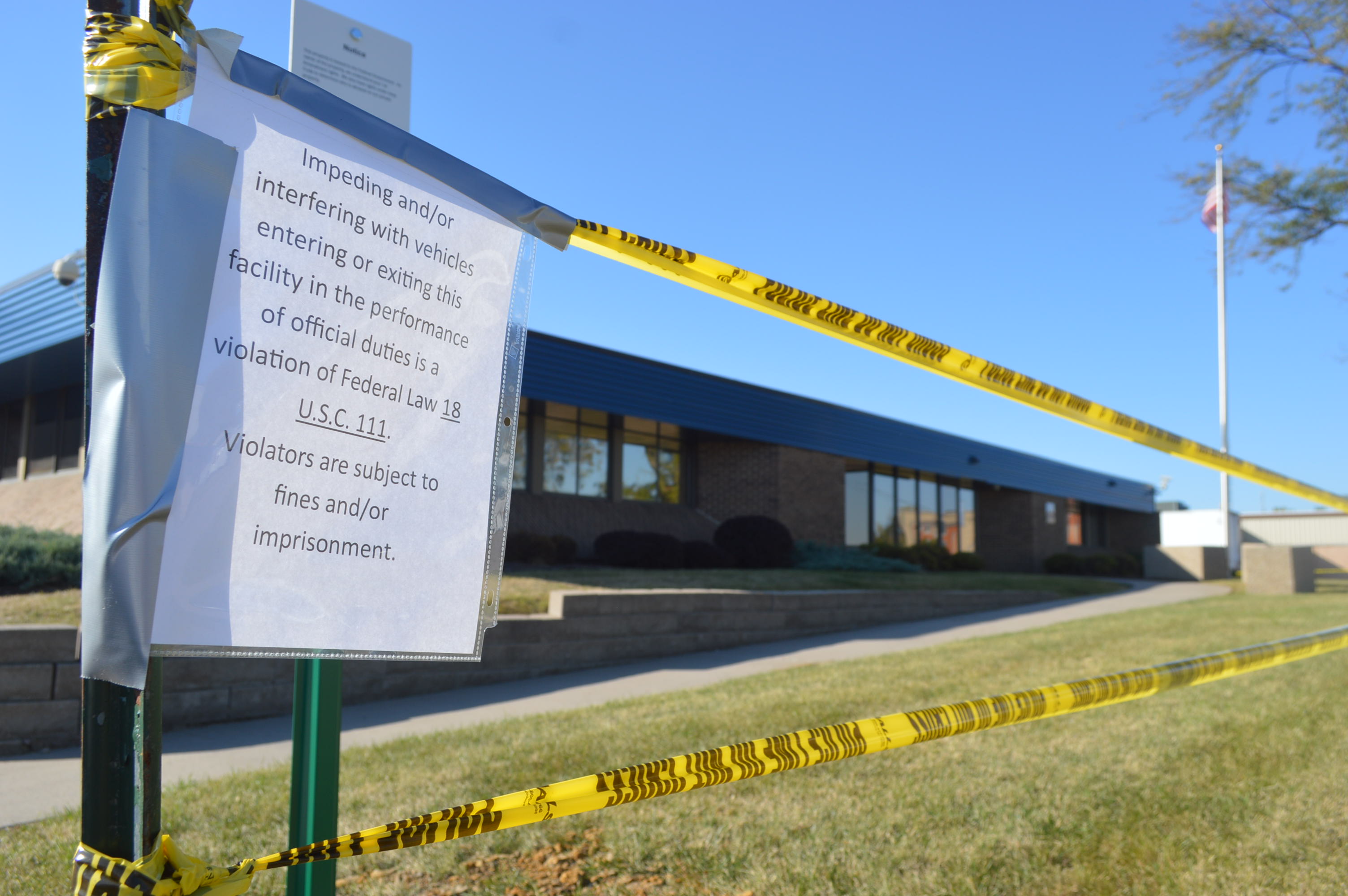
CEDAR RAPIDS, Iowa — Disregarding the Historic Preservation Commission’s objections, the Department of Homeland Security indicated it still intends to construct a tall fence around its U.S. Immigration and Customs Enforcement office in Cedar Rapids.
The commission will consider responding to the department’s reply regarding the proposed fence at 3351 Square D Drive SW, during its Thursday, March 26, 2026, meeting.
The 4:30 p.m. meeting is in the Five Seasons Conference Room of the City Services Center, 500 15th Ave. SW. Members of the public can comment during the public comment period at the beginning of the meeting.
During its Feb. 26 meeting, all but one of the commission members agreed that the building that houses the ICE office, the former Pepco headquarters, should be surveyed as potentially eligible for the National Register of Historic Places and that any fence should not obscure views of the building.
Related: Fence divides Historic Preservation Commission
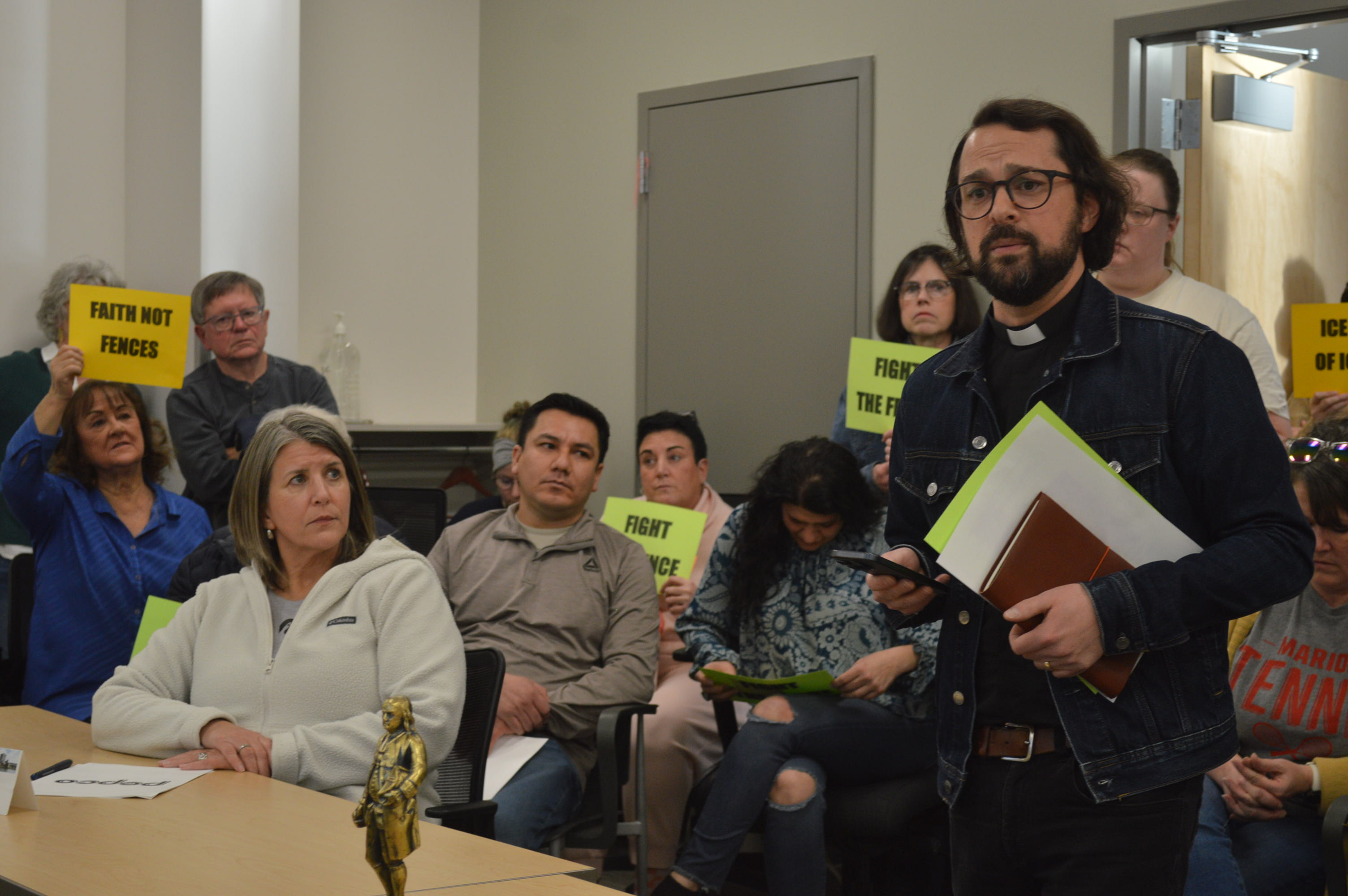
The Rev. Jonathan Heifner, lead pastor at St. Paul’s United Methodist Church, speaks to the Historic Preservation Commission to oppose a proposed fence at the Cedar Rapids ICE office. (photo/Cindy Hadish)
Commissioners said the building could qualify for the listing under criterion B, given its connection to prominent local architect Leo Peiffer, who designed the building, and criterion C, as a fine example of modernist design in an industrial setting.
They suggested a 4-foot-tall fence rather than ICE plans that call for approximately 350 linear feet of new 10-foot-high galvanized fencing with privacy netting to the northwest side, and about 275 linear feet of new 7-foot-high galvanized chain-link fence in front of the ICE office.
Additionally, approximately 400 linear feet of existing fencing will have privacy netting installed, under those plans.
Nearly 20 people spoke at the commission meeting, including pastors and supporters who accompany immigrants to their check-ins with ICE, who said the fence is intended to hide detentions and family separations from view and to undermine First Amendment and religious-freedom activities.
More: See photos from a protest at the Cedar Rapids ICE office

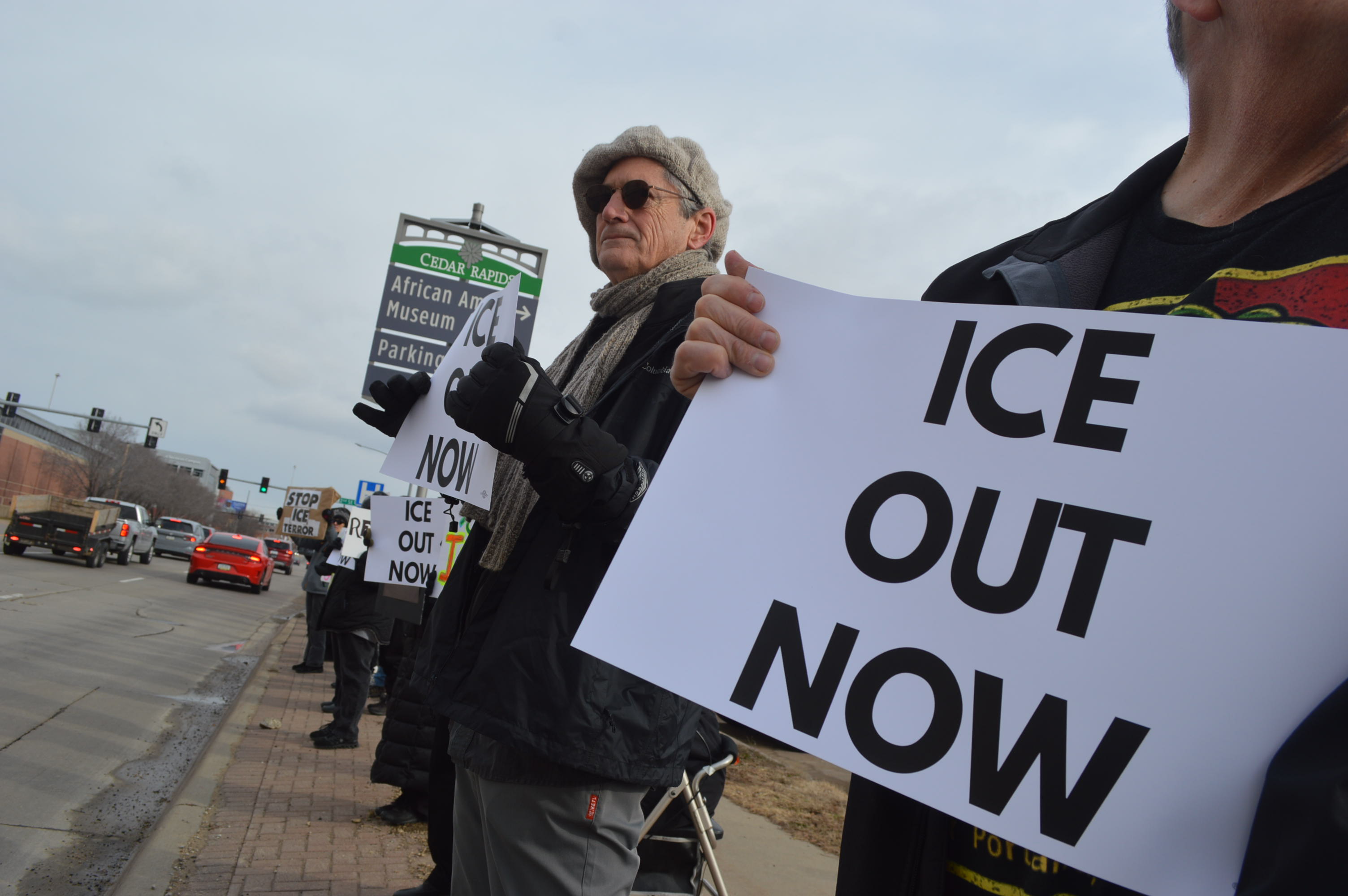
Supporters of Pascual Pedro hold signs July 9, 2025, outside of the U.S. Immigration and Customs Enforcement Office in Cedar Rapids, Iowa. (photo/Cindy Hadish)
ICE officials responded to the commission’s comments by claiming the building, constructed sometime between 1974 and 1976, is ineligible for the National Register of Historic Places due to a large addition constructed in the 1980s.
While ICE admitted that Peiffer was a well-known mid-century modern architect, they claimed the former Pepco office is not the “best representation” of his work, even as they cited one example that no longer exists.
“(O)ther notable examples of Peiffer’s work in Cedar Rapids include, but is not limited to, the
architects personal home, All Saints Catholic Church, and the Shorewood Restaurant,” a letter responding to the commission’s comments stated.
The Shorewood Restaurant, located in the 1960s at 1900 Hwy. 150 — later Collins Road — was designed by Peiffer, but was demolished decades ago to make way for Highway 100.
Gabrielle Fernandez, environmental protection specialist in the DHS Office of the Chief Readiness Support Officer, responded to the commission as part of the Section 106 process, which requires federal agencies to consider the effects of their projects on historic properties.
The commission’s comments do not go to the City Council, but are passed along to the federal officials in charge of the project.
Read more: Details revealed for ICE fence in Cedar Rapids
No Comments Yet