
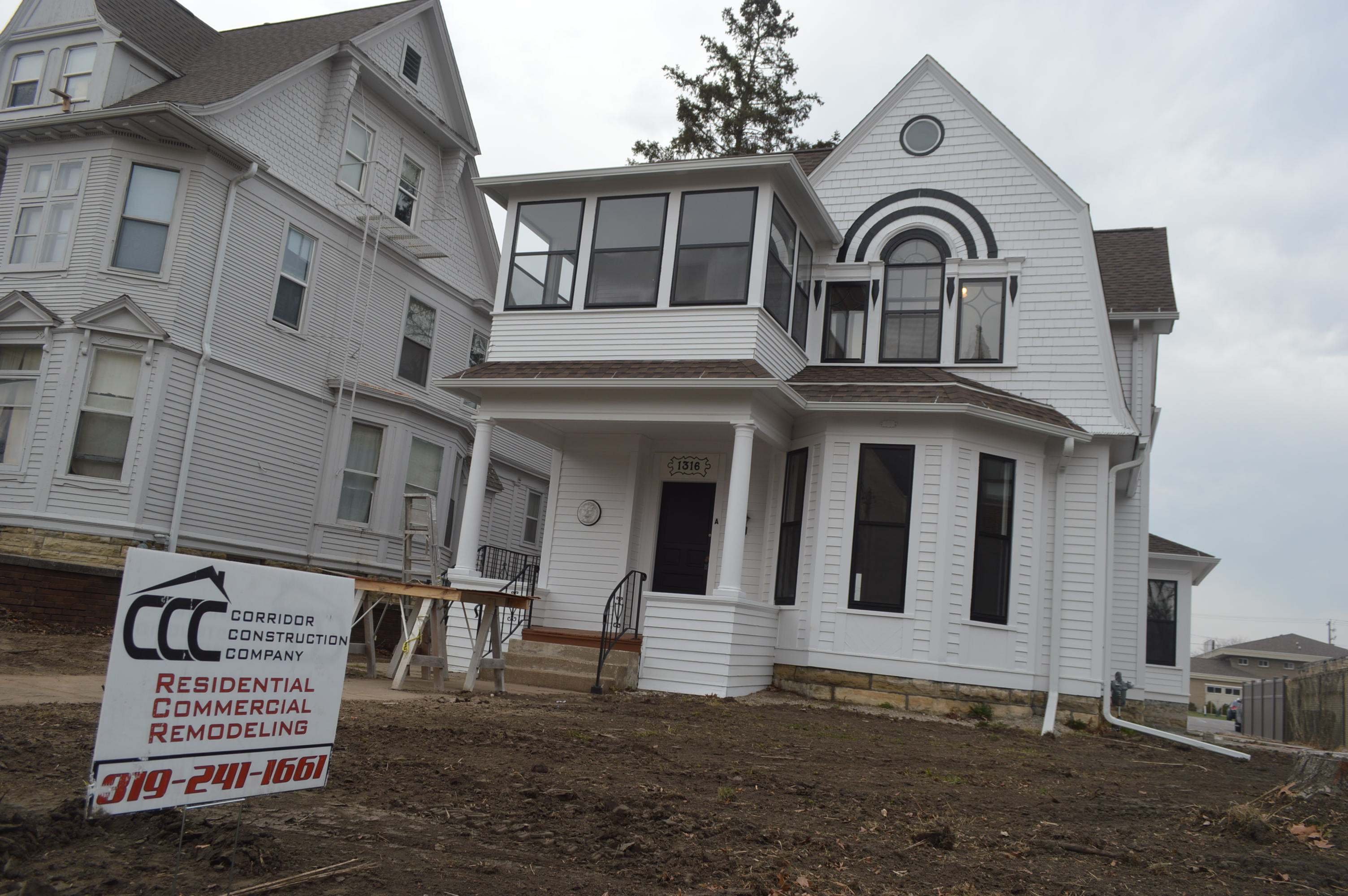
CEDAR RAPIDS, Iowa — A Cedar Rapids home that has stood the test of time since the Civil War era has been brought back to life after nearly two decades sitting vacant, thanks to a unique partnership.
The nonprofit Matthew 25, through the help of St. Paul’s United Methodist Church and other community partners, restored what’s now known as the Coe-Paul-Westrom House, 1316 Third Ave. SE, to serve as affordable housing for two families.
A home “reveal” was held Thursday, March 26, 2026, to showcase nearly a year of work, led by Matthew 25 housing team’s general contractor Steve Miller, owner of Corridor Construction Company.
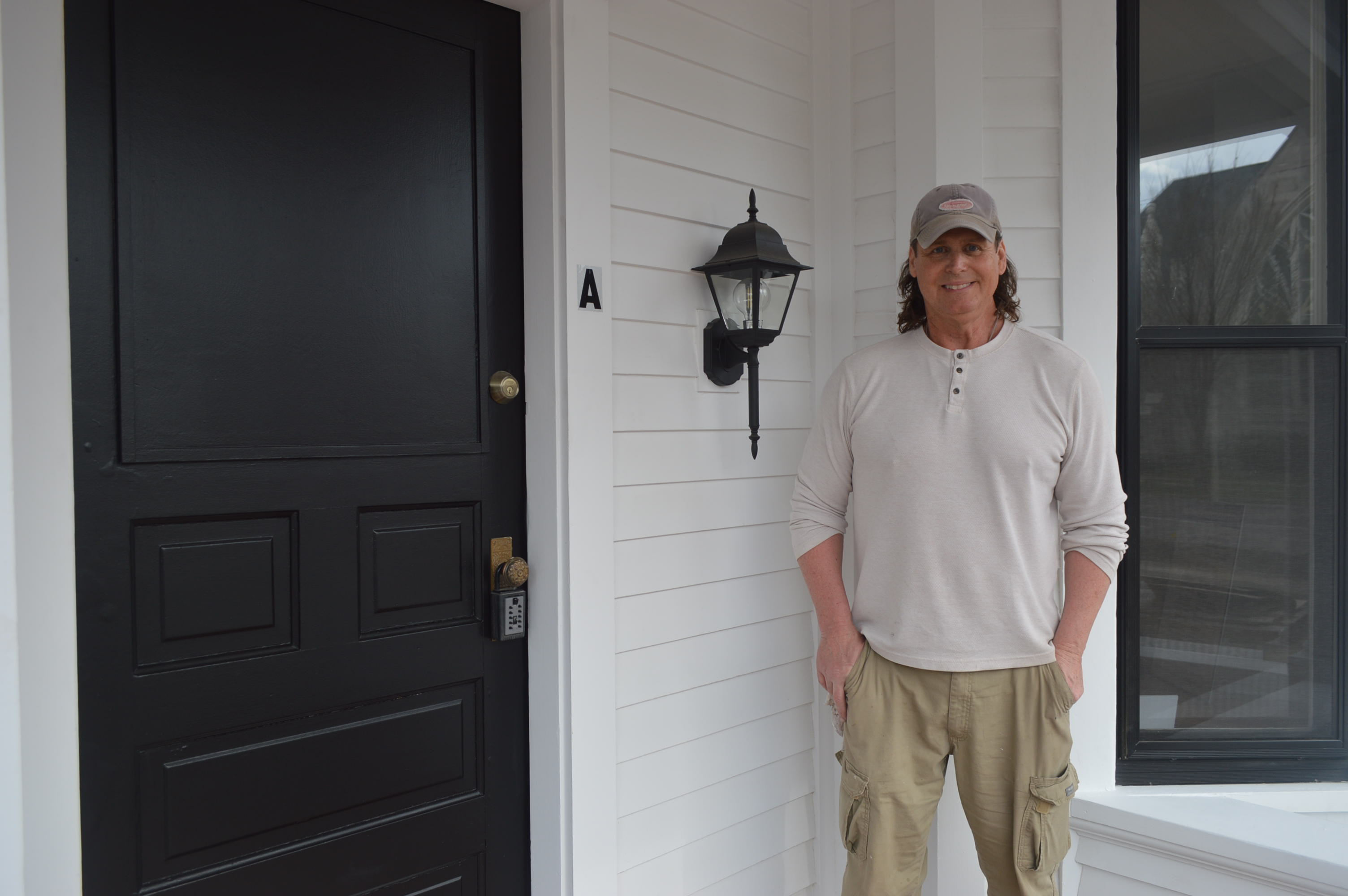
Steve Miller, who served as general contractor on the project for Matthew 25, is seen at the entrance of the house on March 26, 2026. (photo/Cindy Hadish)
The home has been restored to closely reflect its historic appearance from the late 19th and early 20th centuries, preserving a meaningful piece of Cedar Rapids history, while helping meet critical housing needs in the community, St. Paul’s and Matthew 25 leaders said.
“It’s amazing,” said Jerry Oakland, who served on St. Paul’s task force.
Oakland noted that the home had originally been purchased by the church, with expanded parking in mind.

Jerry Oakland, a St. Paul’s United Methodist Church task force member for the Coe-Paul-Westrom House. (photo/Cindy Hadish)
But with the lack of affordable housing becoming an issue, he said, St. Paul’s mission team began exploring the idea of revitalizing the neighborhood by saving the house.
“It feels good to be able to strengthen the community,” Oakland said.
Matthew 25 Executive Director Courtney Ball also cited the affordable housing shortage in Cedar Rapids as a factor in taking on the project.
The nonprofit typically does its work on the west side of Cedar Rapids, but agreed to become involved due to the group’s long-standing relationship with St. Paul’s, he said.

Courtney Ball, executive director of Matthew 25. (photo/Cindy Hadish)
Matthew 25 has rebuilt homes and constructed new net-zero homes in northwest Cedar Rapids, and with the Coe-Paul-Westrom House, will have 28 units by the end of the year, Ball said.
Tenants must meet income guidelines, with rent at approximately $600 per month, depending on family size.
“It’s a testament to how the community is willing to contribute to a project like this,” he said, citing the total budget of $465,000, from a number of sources. “There is support for preserving historic buildings.”
The tenants have not yet been selected, and potential applicants can find more information on the group’s website: Matthew 25
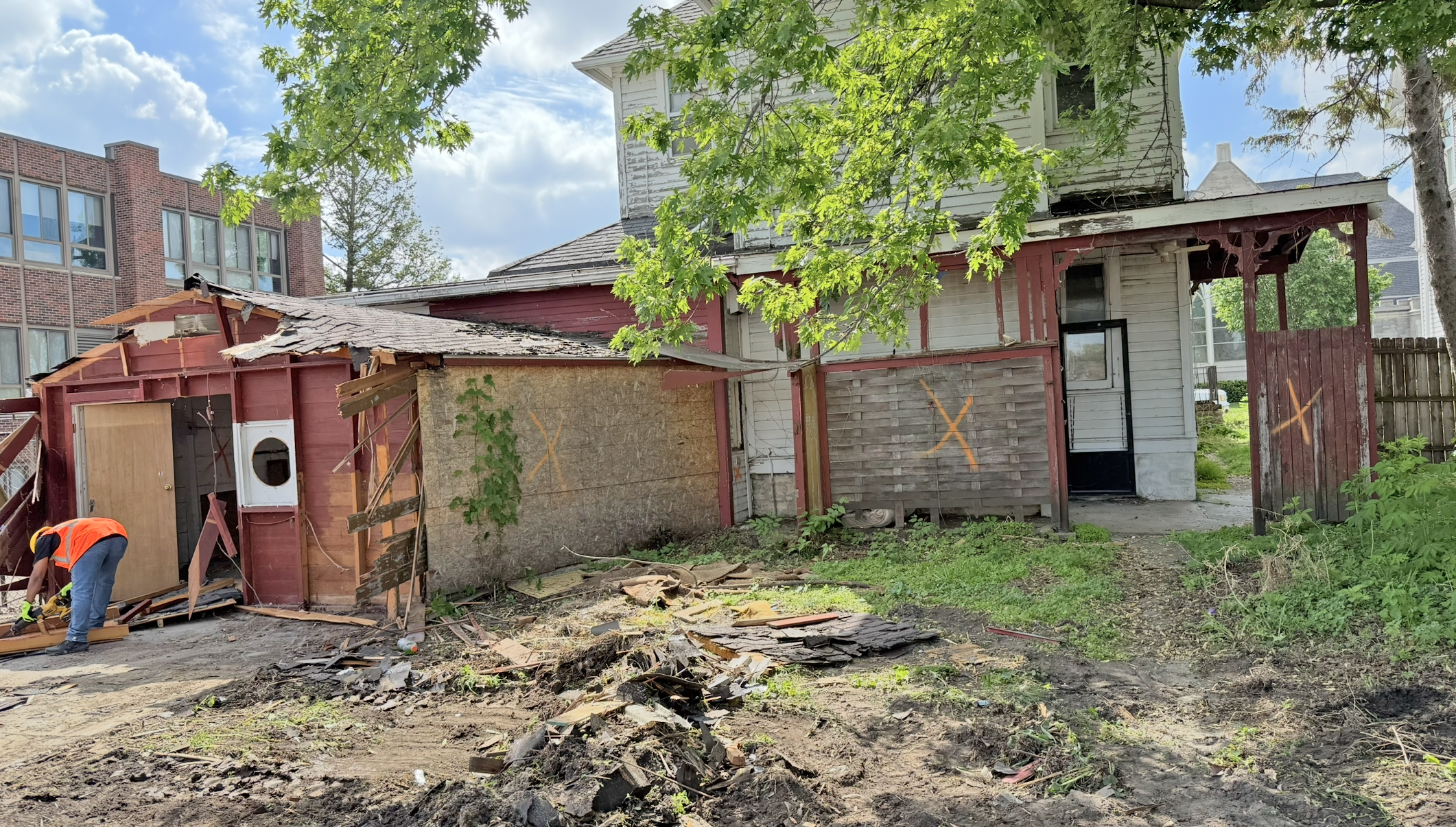
The rear of the Coe-Paul-Westrom House is shown as work began in 2025. (Photo/Matthew 25)
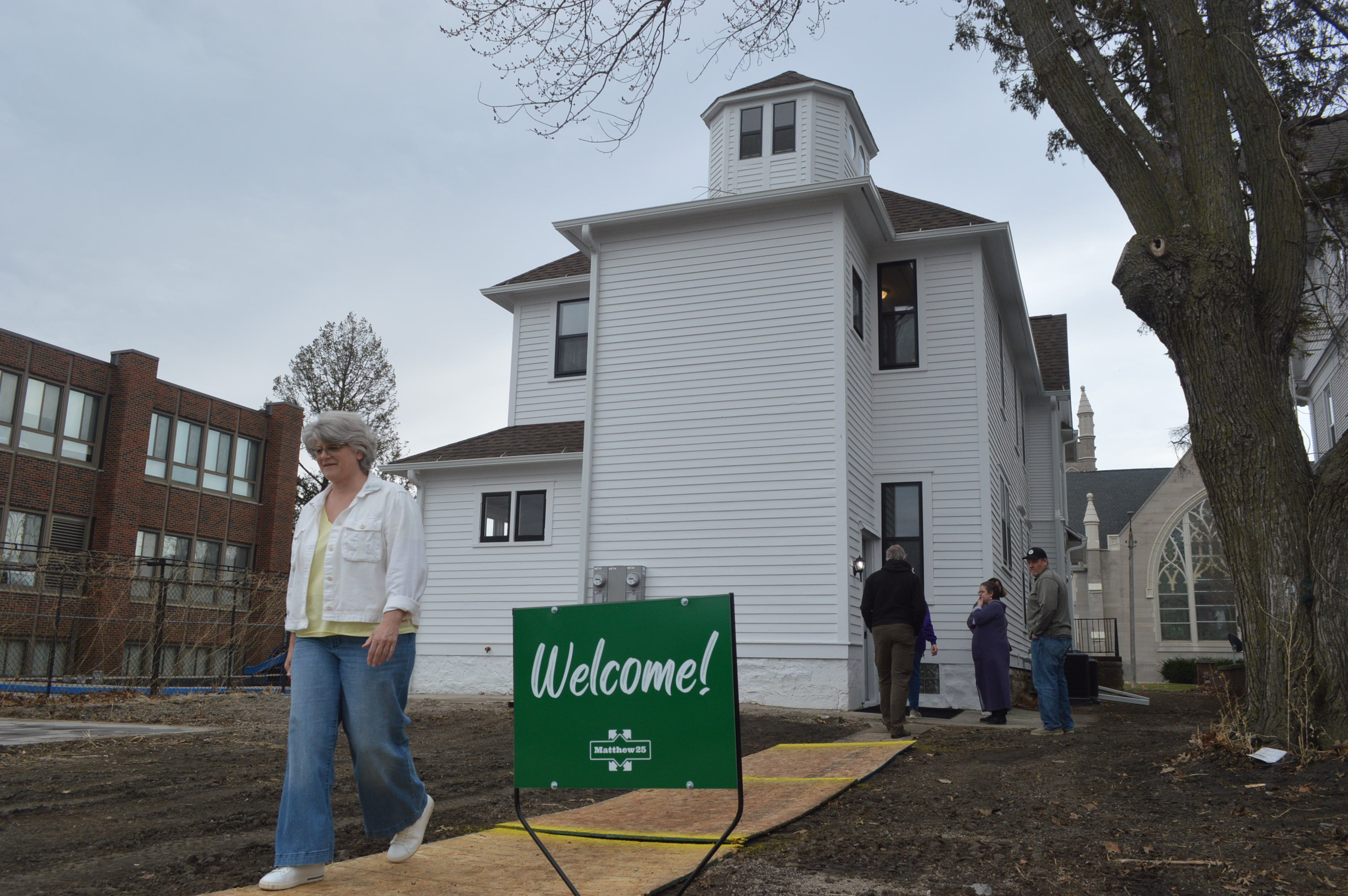
The same area of the rear of the house is shown after restoration on March 26, 2026. (photo/Cindy Hadish)
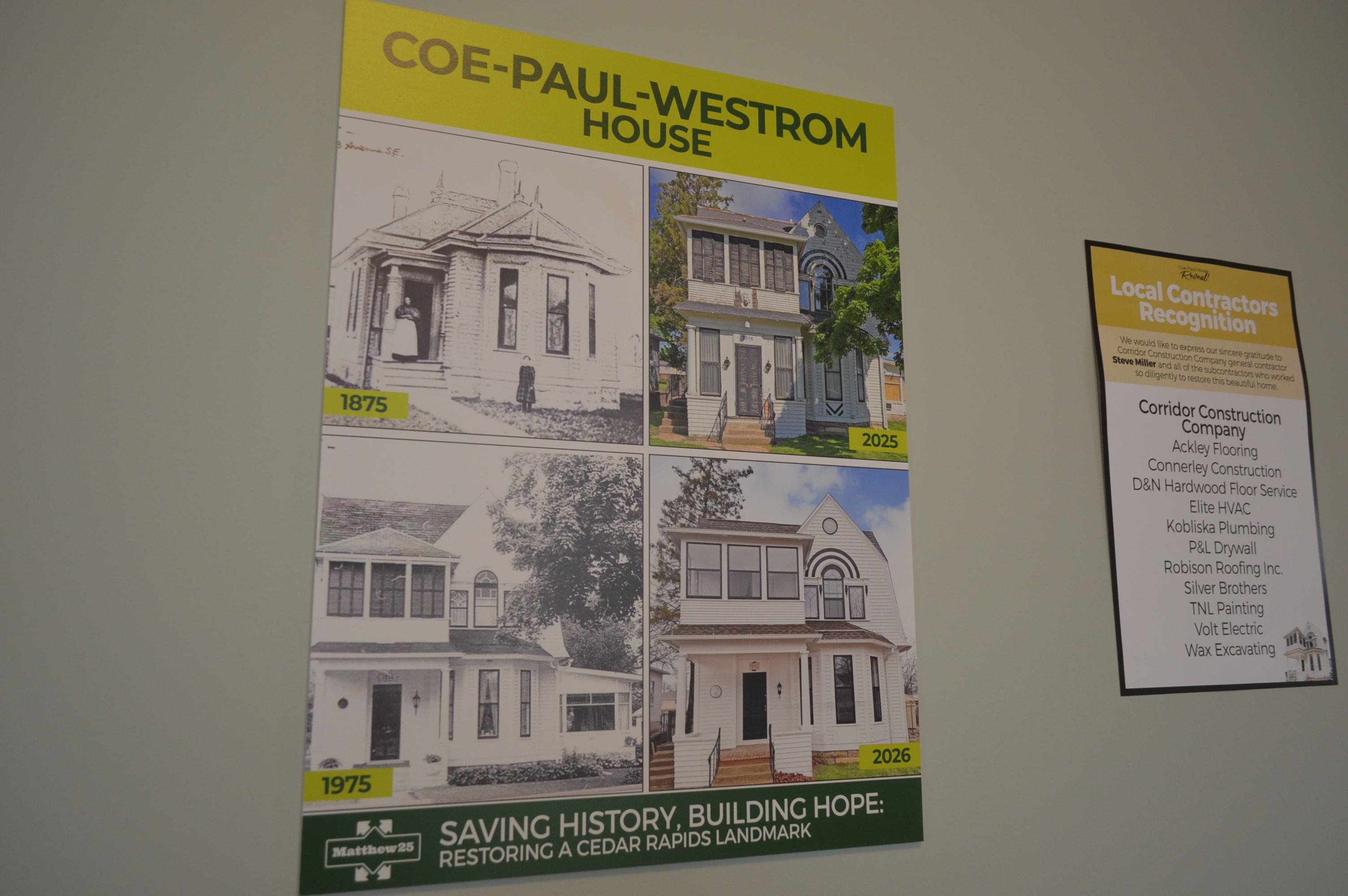
According to research provided by Matthew 25, the land was originally part of a federal land grant and later owned by Coe College, with the original five-room house built in the 1860’s as a residence for a farmer working the surrounding farmland.
In 1882, the property was sold to James and Sarah Paul, who expanded the home with a second story as the surrounding neighborhood began to grow.
At the time, Third Avenue was becoming a desirable streetcar corridor connecting residents to downtown Cedar Rapids, nearby schools and local attractions, such as the fairgrounds that once stood nearby.
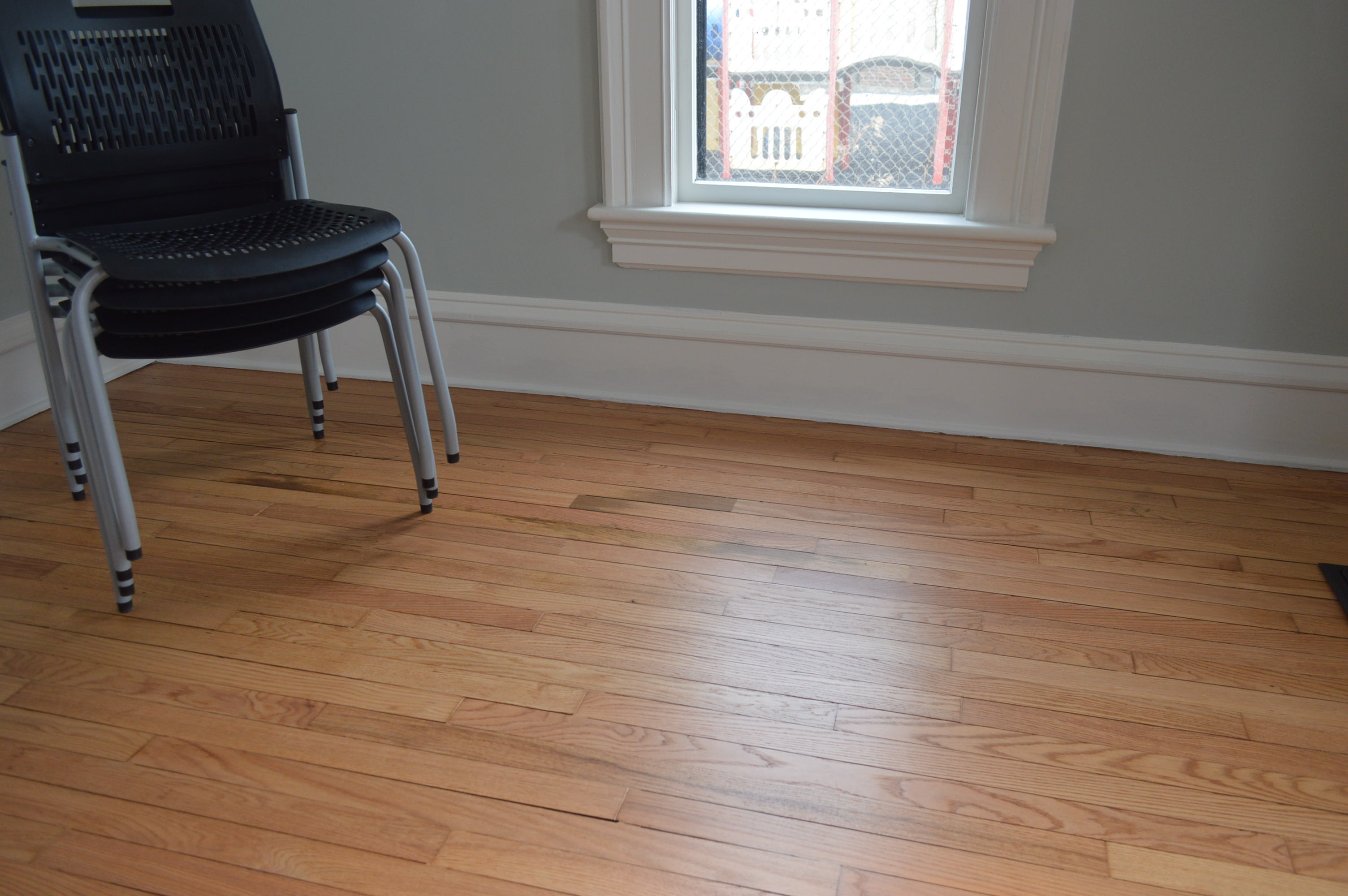
The nonprofit Save CR Heritage contributed pieces of flooring that matched portions of the floor removed due to termite damage. Board President Nikki Halvorson also conducted research on the home’s history. (photo/Cindy Hadish)
Over the decades, the house served as both a family home and a rental property, remaining in the Paul family until the early 1970s.
The house later achieved local fame under the ownership of Raymond Westrom, a Navy veteran, chef at the historic Roosevelt Hotel, and avid collector. Westrom filled the house with thousands of antiques, artifacts, and stained-glass pieces, welcoming visitors for extensive tours of the home that often lasted several hours.
After Westrom’s death in 2008, the home was acquired by St. Paul’s United Methodist Church, next door.
For years, the congregation wrestled with what to do with the deteriorating structure, but rather than demolish the home, which sits in one of the city’s two local historic districts, the church chose to pursue restoration.
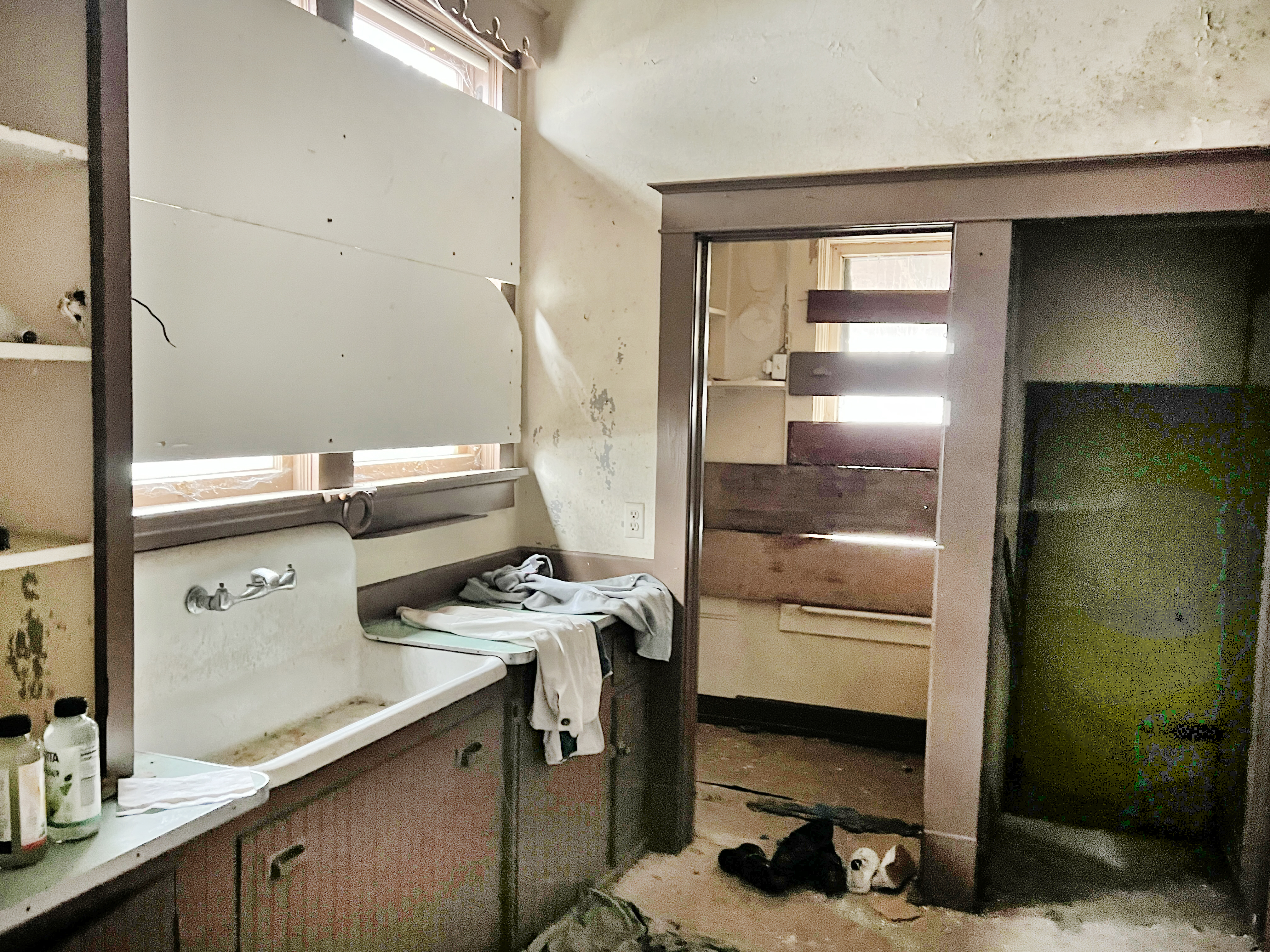
The interior of the Coe-Paul-Westrom House is shown before restoration began in 2025. (photo/Matthew 25)
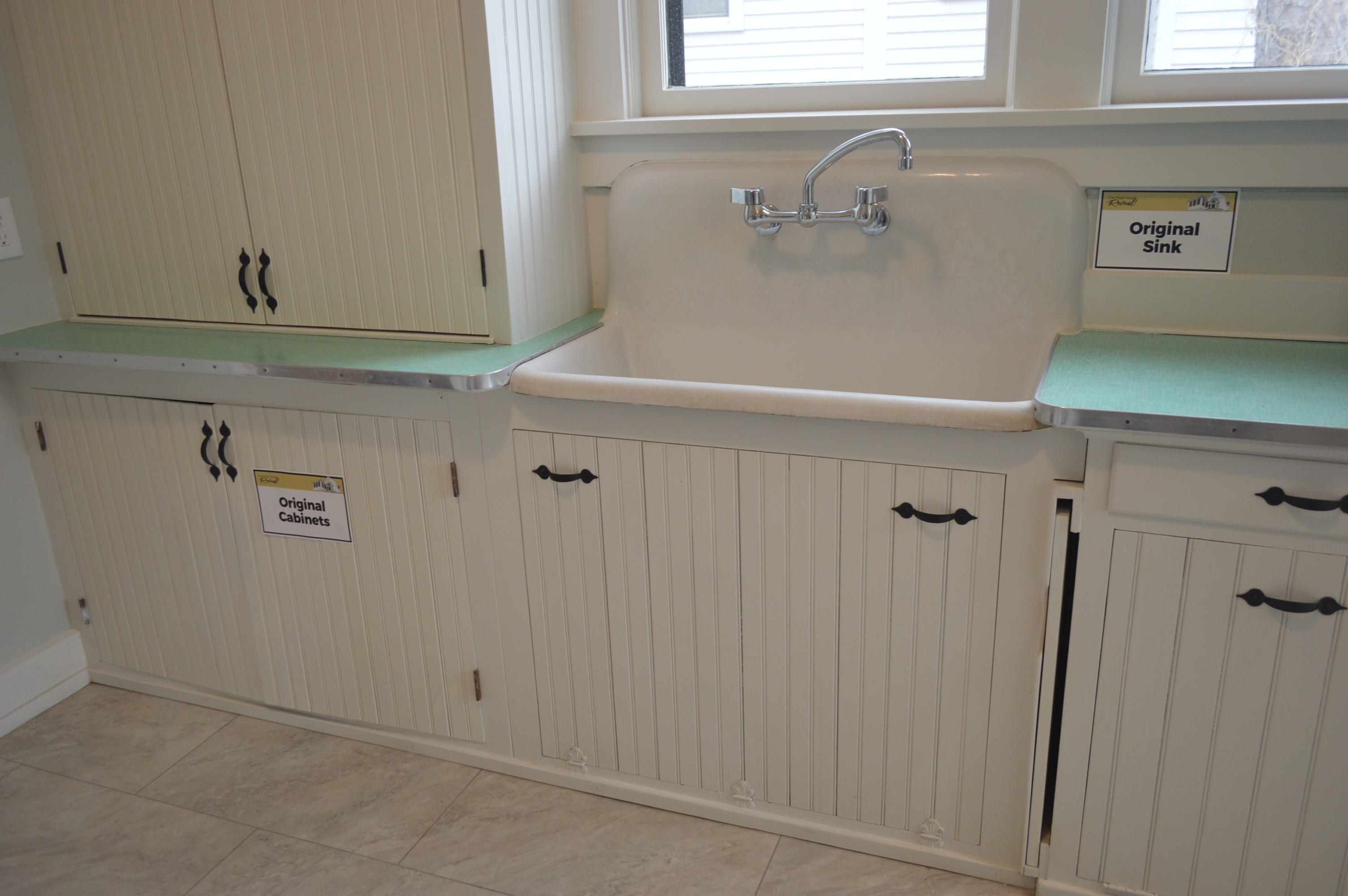
The same kitchen area is shown after restoration. (photo/Cindy Hadish)
St. Paul’s partnered with Matthew 25, donating the property and $150,000 to help make the rehabilitation possible.
Additional funding for the project came from the Housing Fund for Linn County, the City of Cedar Rapids ARPA funds, GreenState Foundation, the City of Cedar Rapids Historic Rehabilitation Program and other community supporters.
In May 2025, Matthew 25 began work on the exterior, launching what historic restoration experts believed would be a long process, as projects like these — especially homes that have sat vacant for years — typically take 18 months to three years to complete once site work begins.
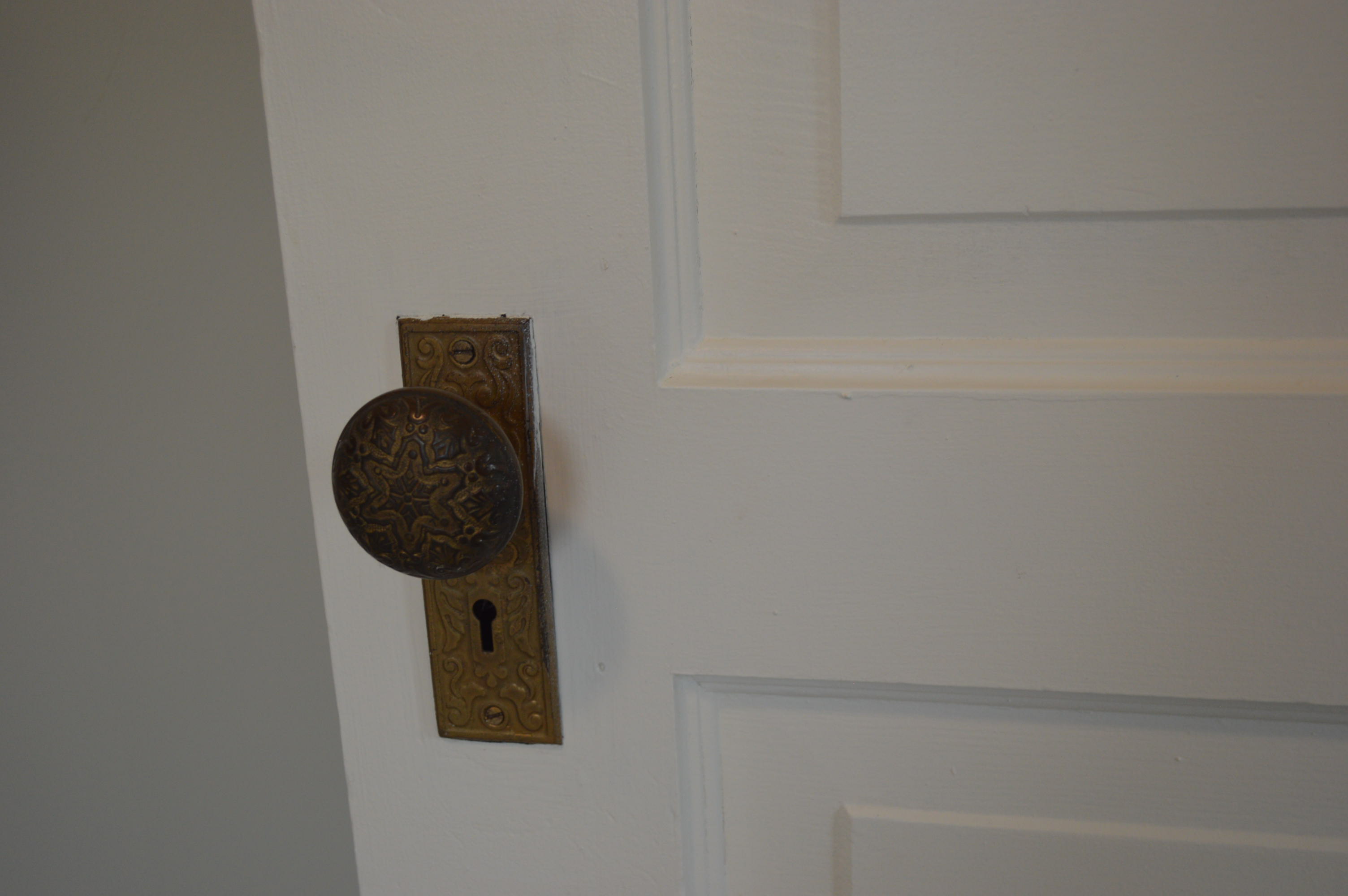
Original doorknobs are among the features retained in the house. (photo/Cindy Hadish)
But Matthew 25’s housing team, led by Miller, restored the home at an extraordinary pace. In just 10 months, the house was brought back to life, ready to begin its next chapter.
Cedar Rapids historian Mark Stoffer Hunter called the house a physical reminder of the city’s earliest history.
“This house is connected to the very heart and soul of Cedar Rapids,” he said in a news release. “It has survived since early Civil War times. It is critical to our sense of place, identity, and who we are as a community.”
More: See photos of another project of Matthew 25, a neighborhood grocery store and more from the Coe-Paul-Westrom home, below:
No Comments Yet