
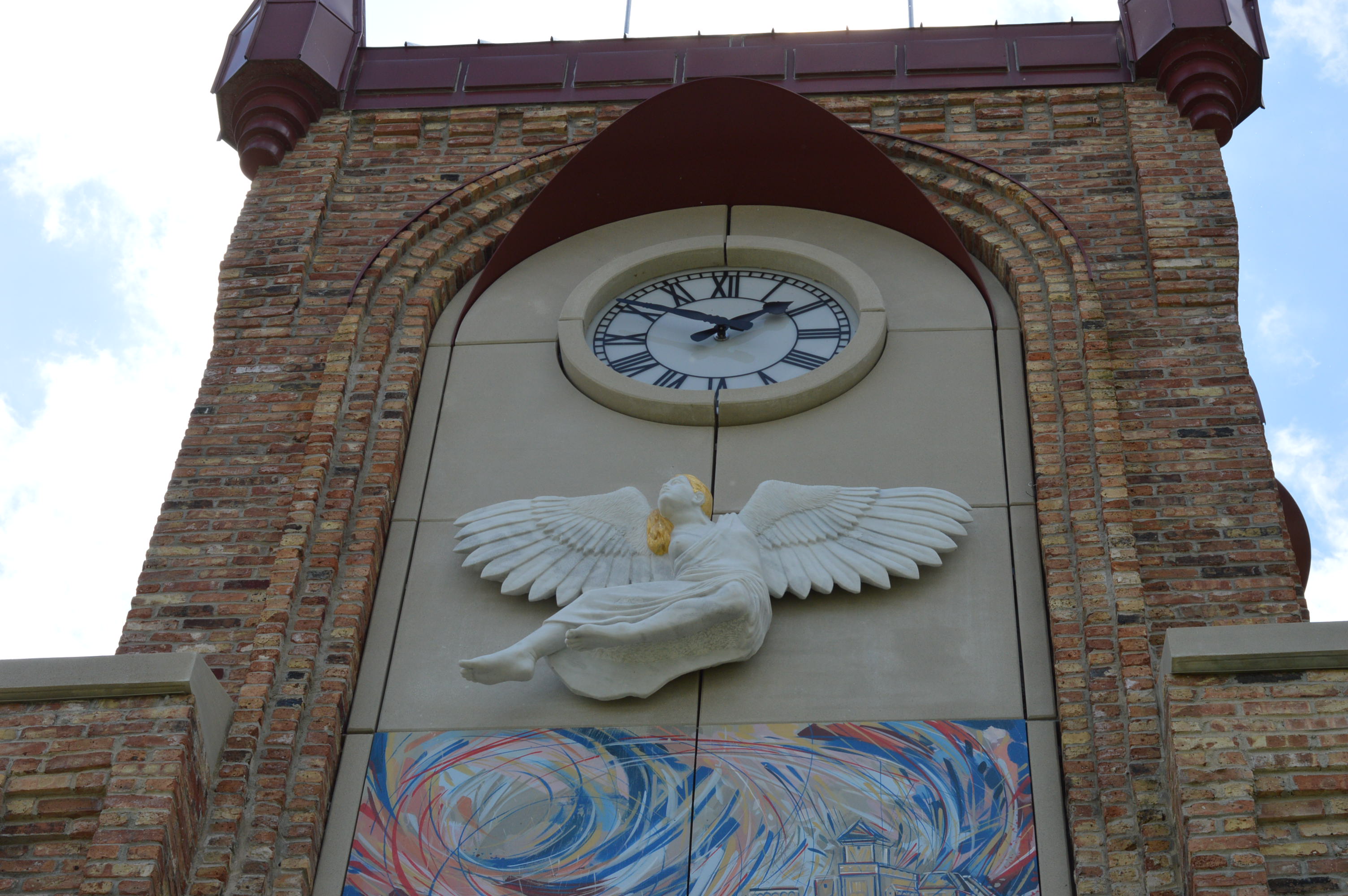
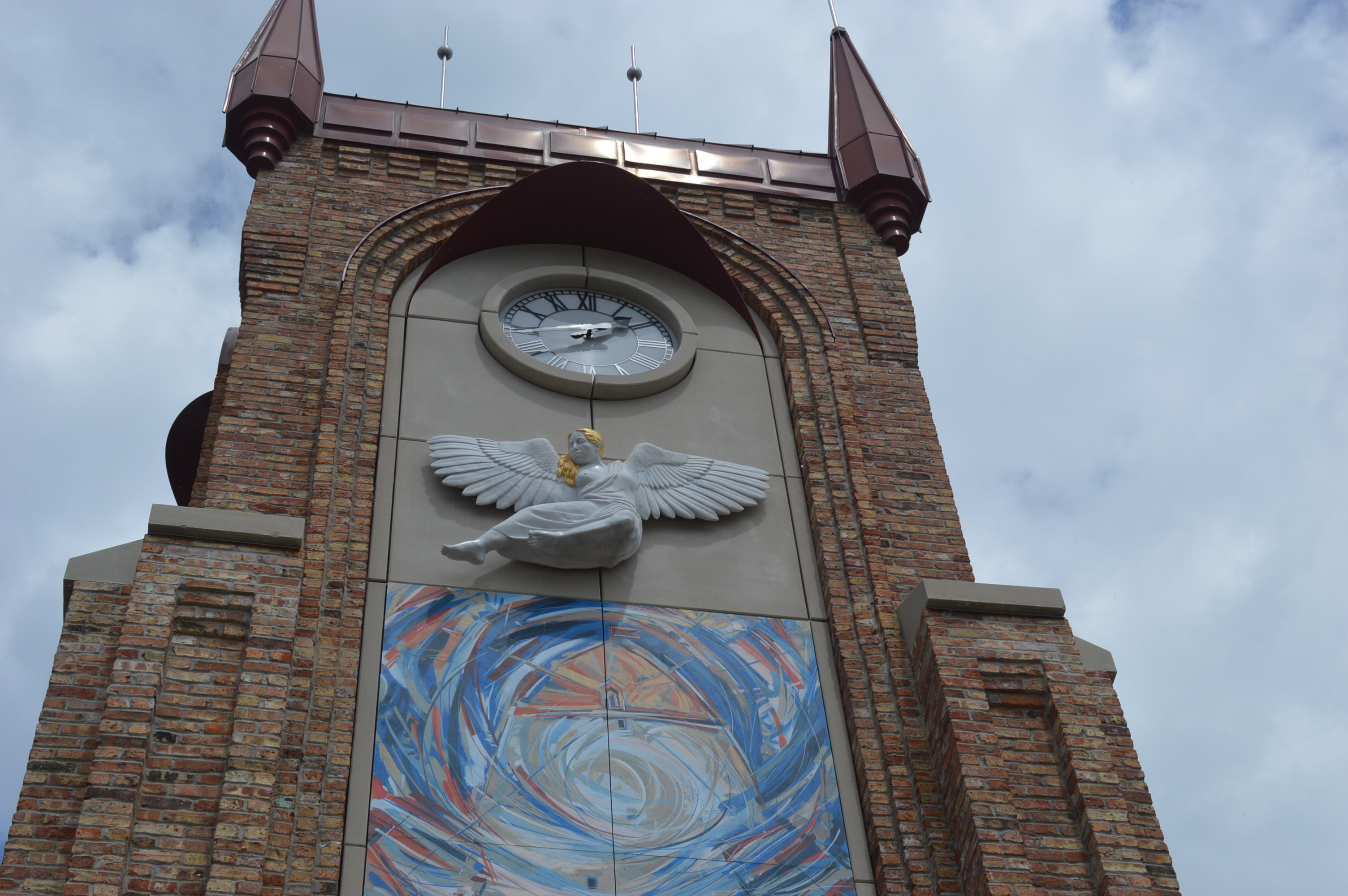
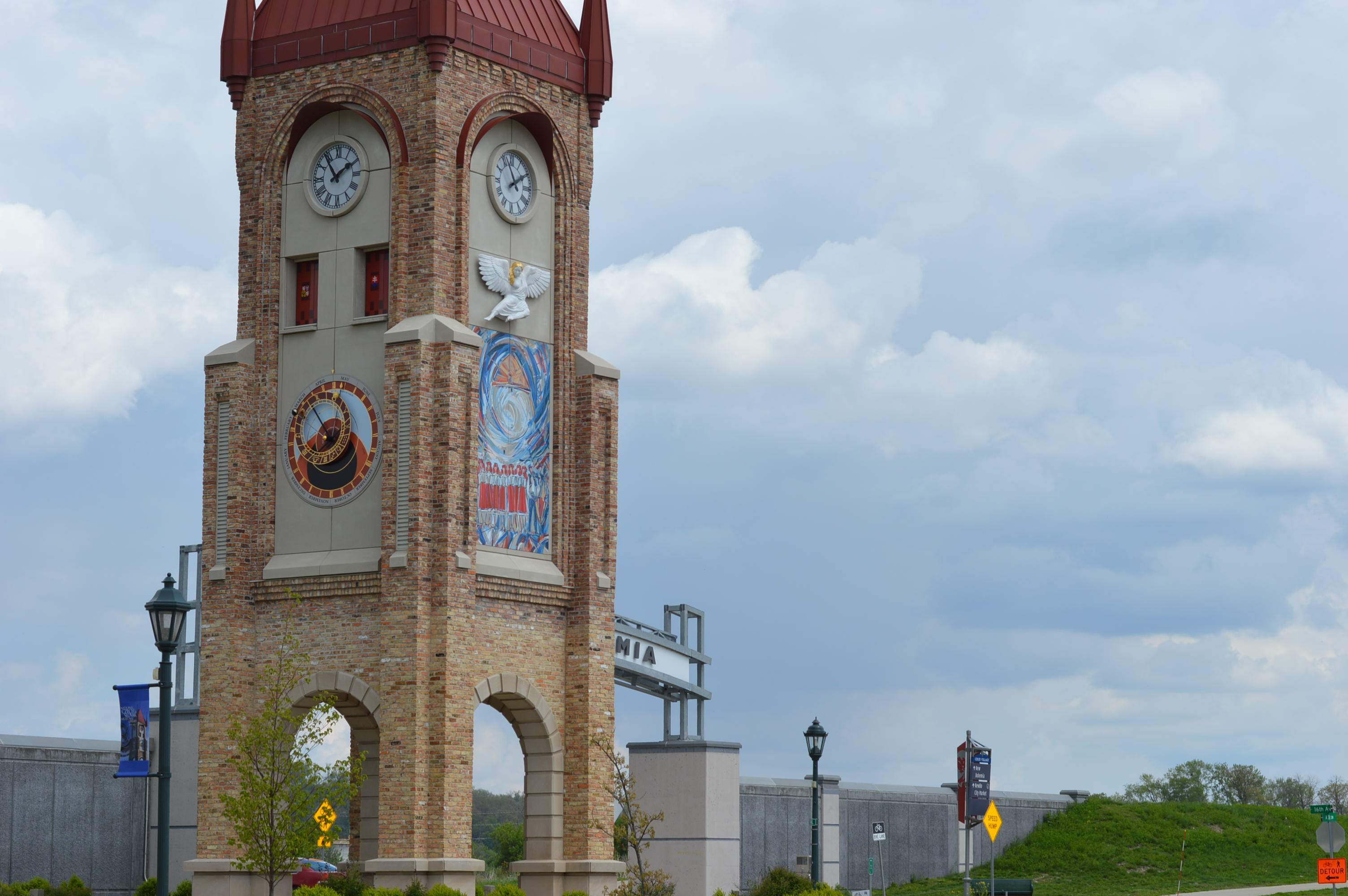
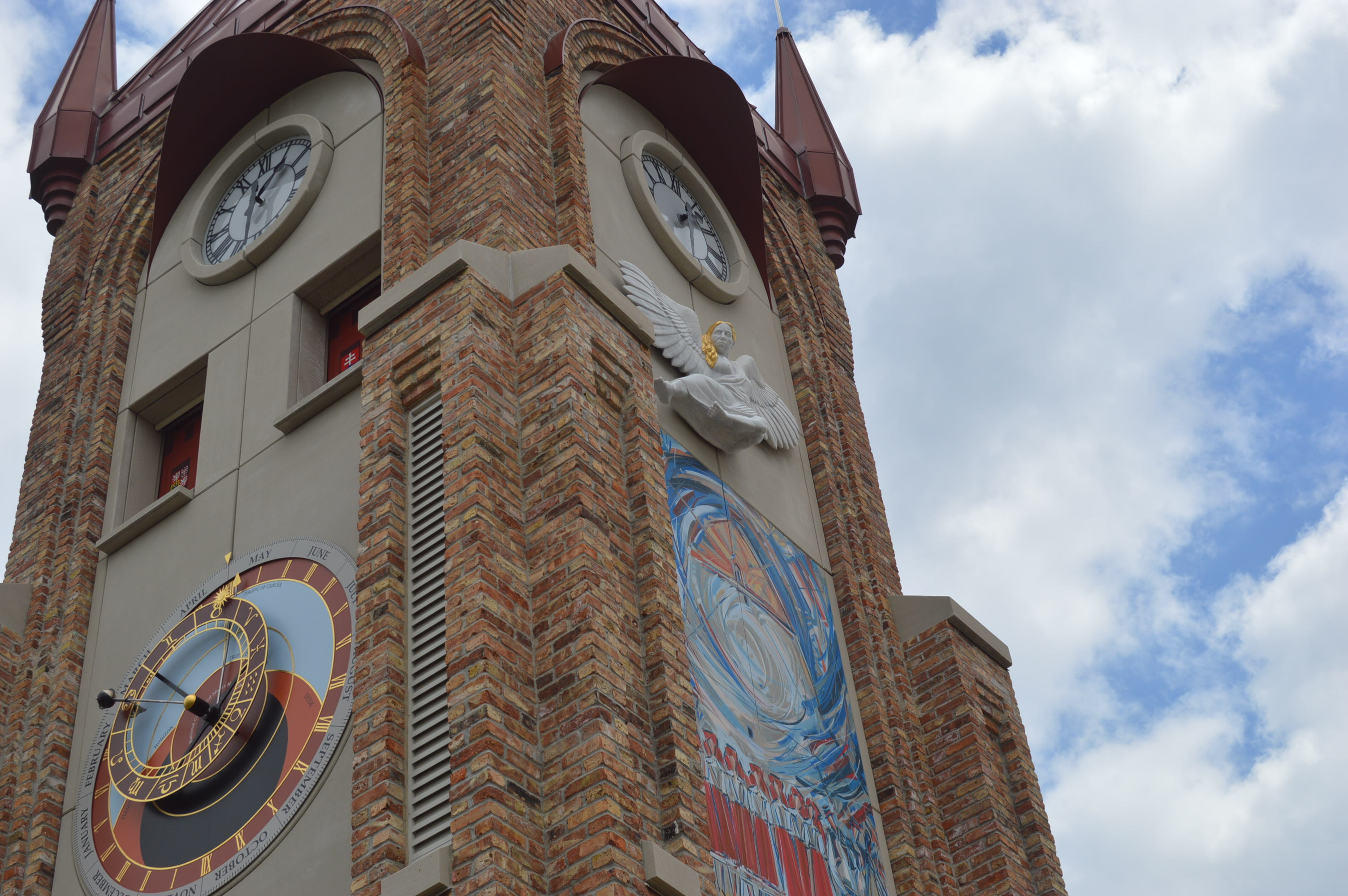
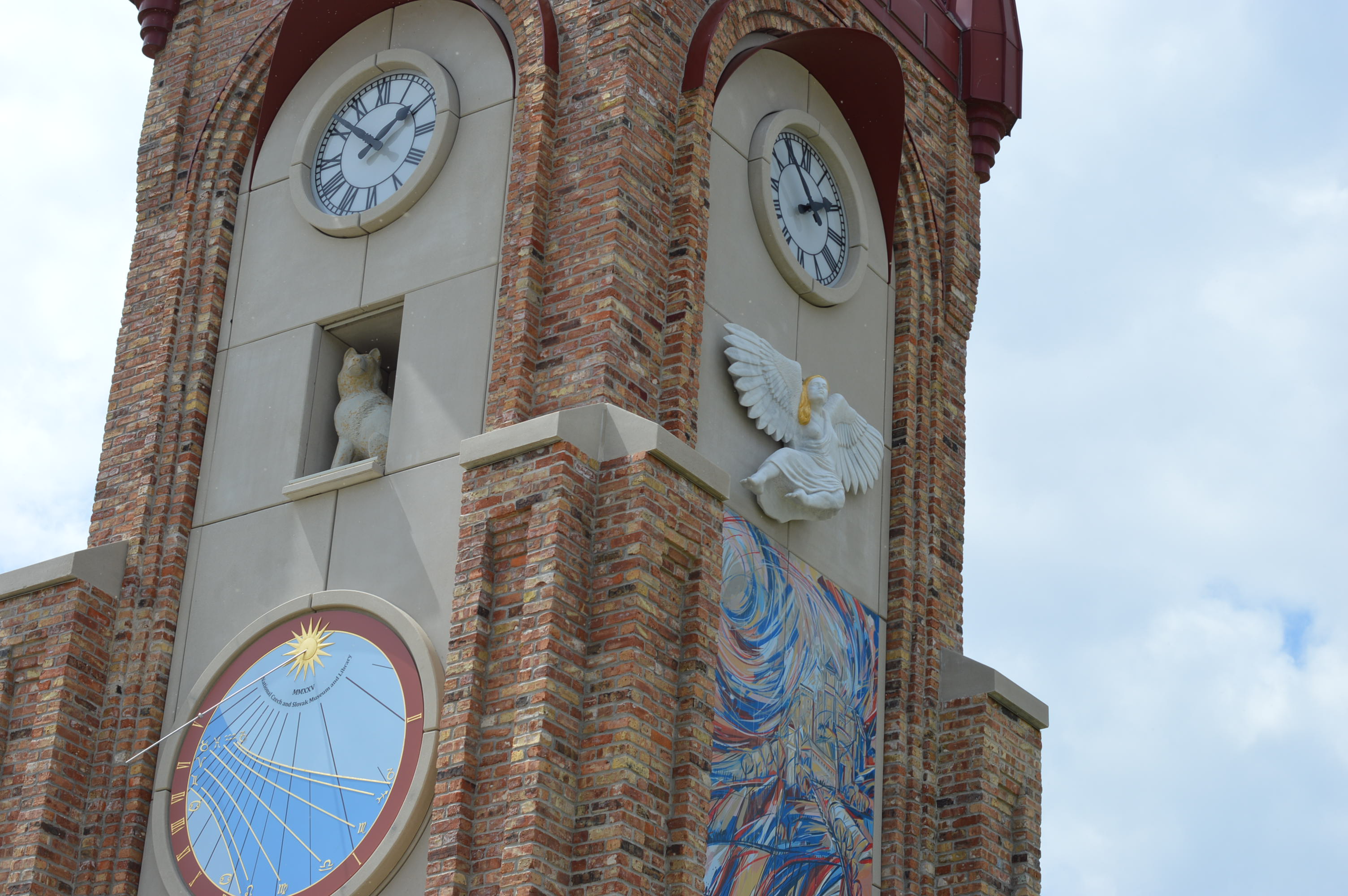
CEDAR RAPIDS, Iowa — Two marble angels will watch over Czech Village after their unveiling as the latest addition to the Buresh Immigration Clock Tower.
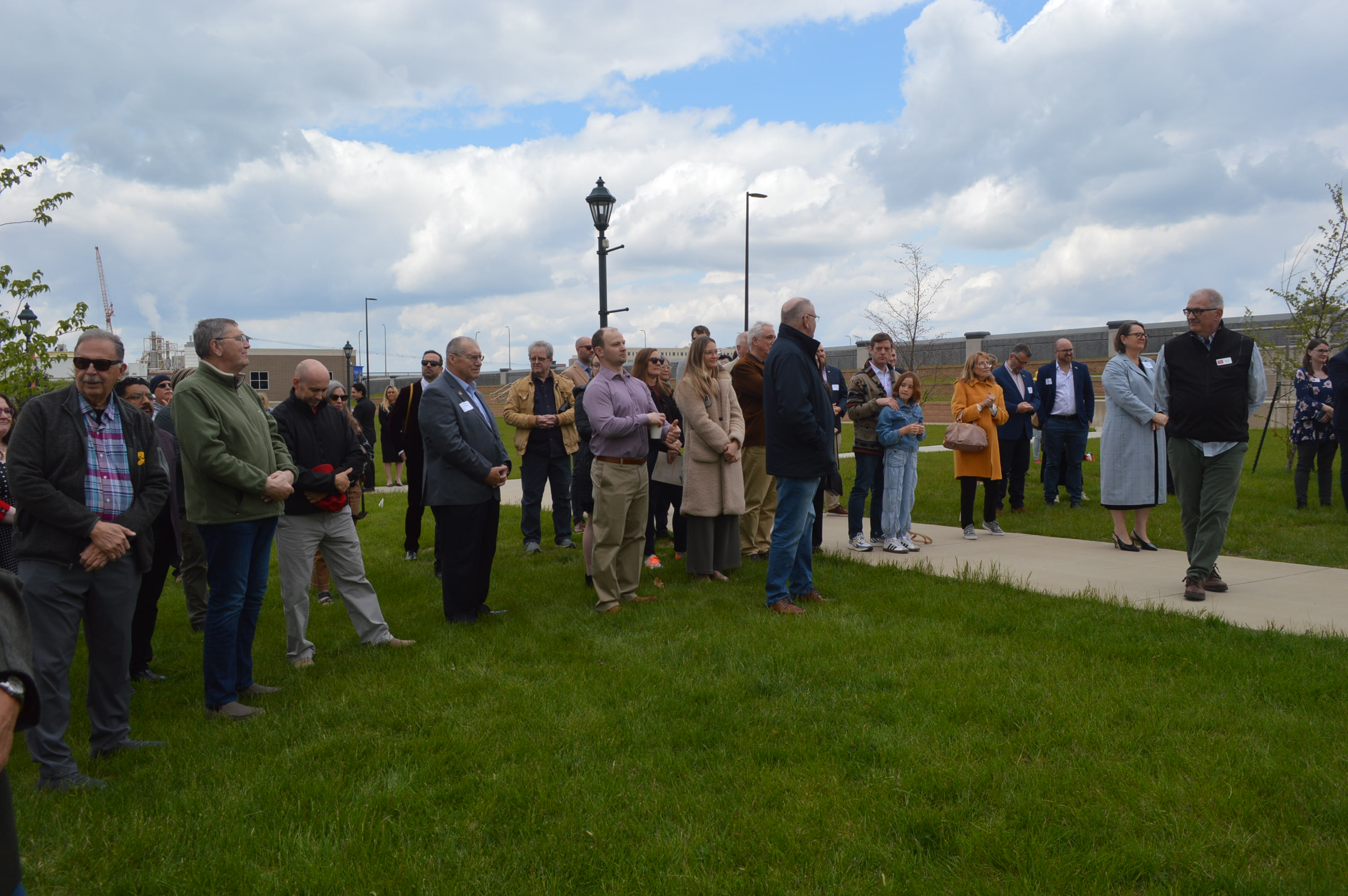
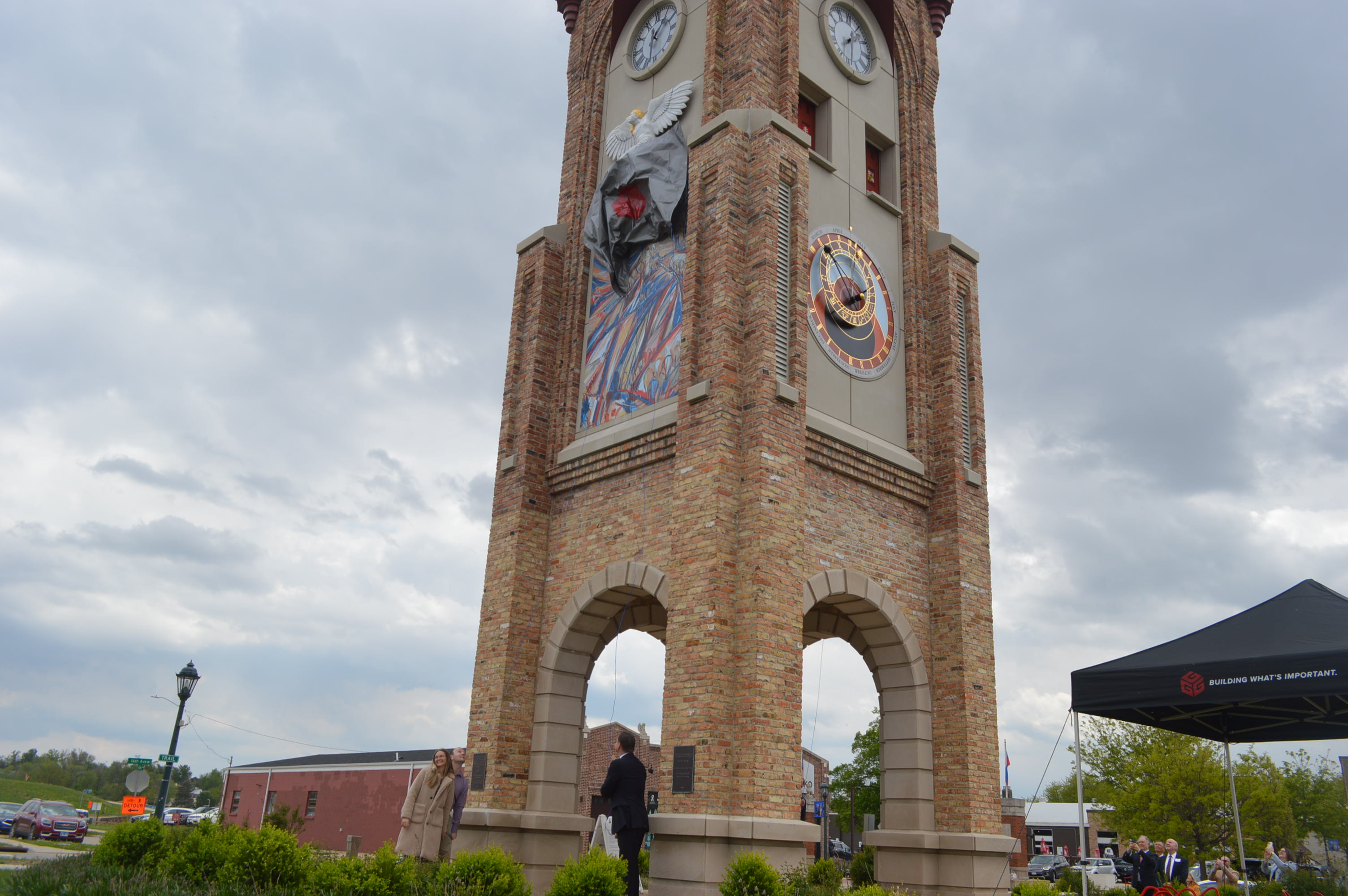
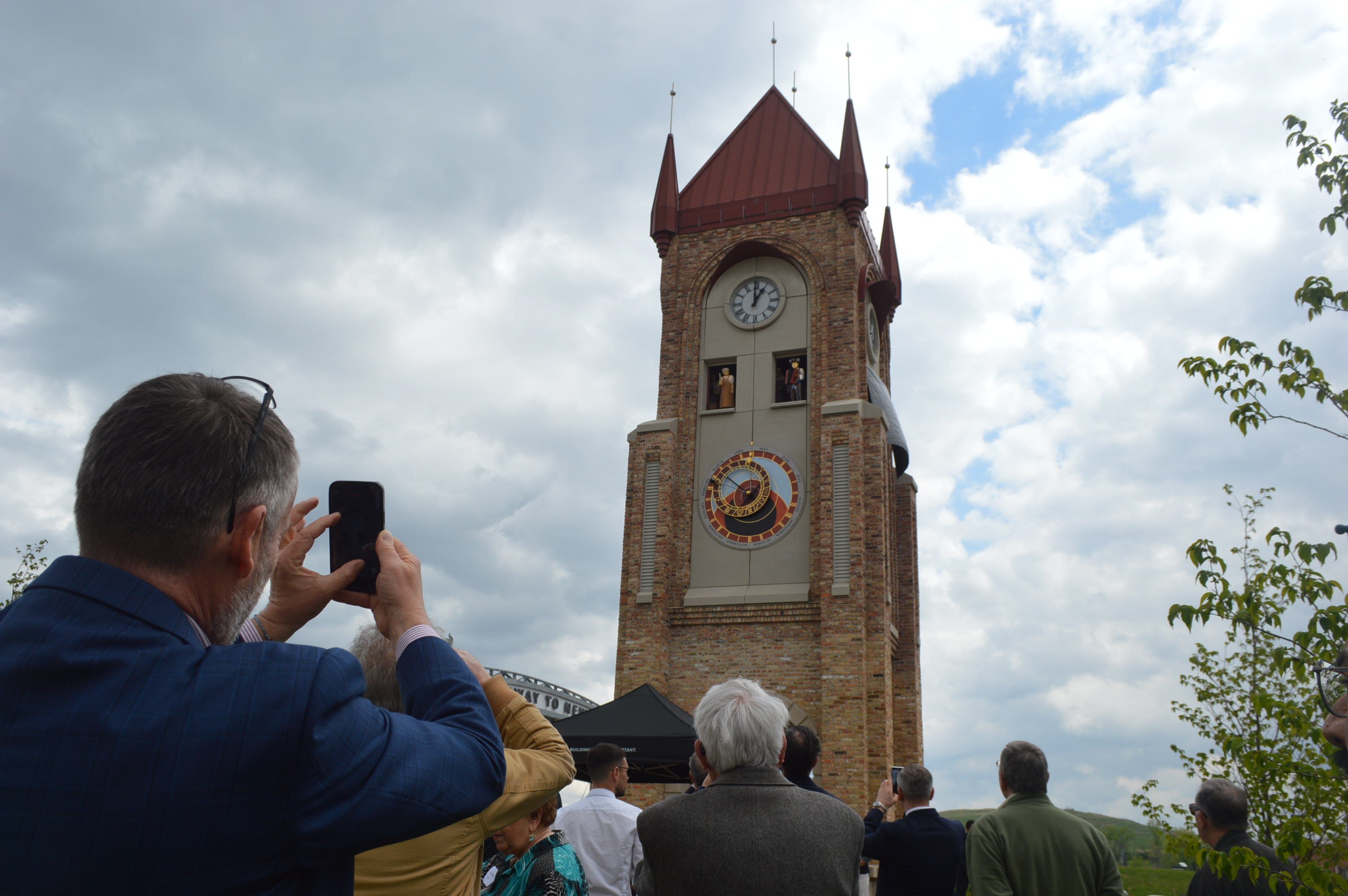
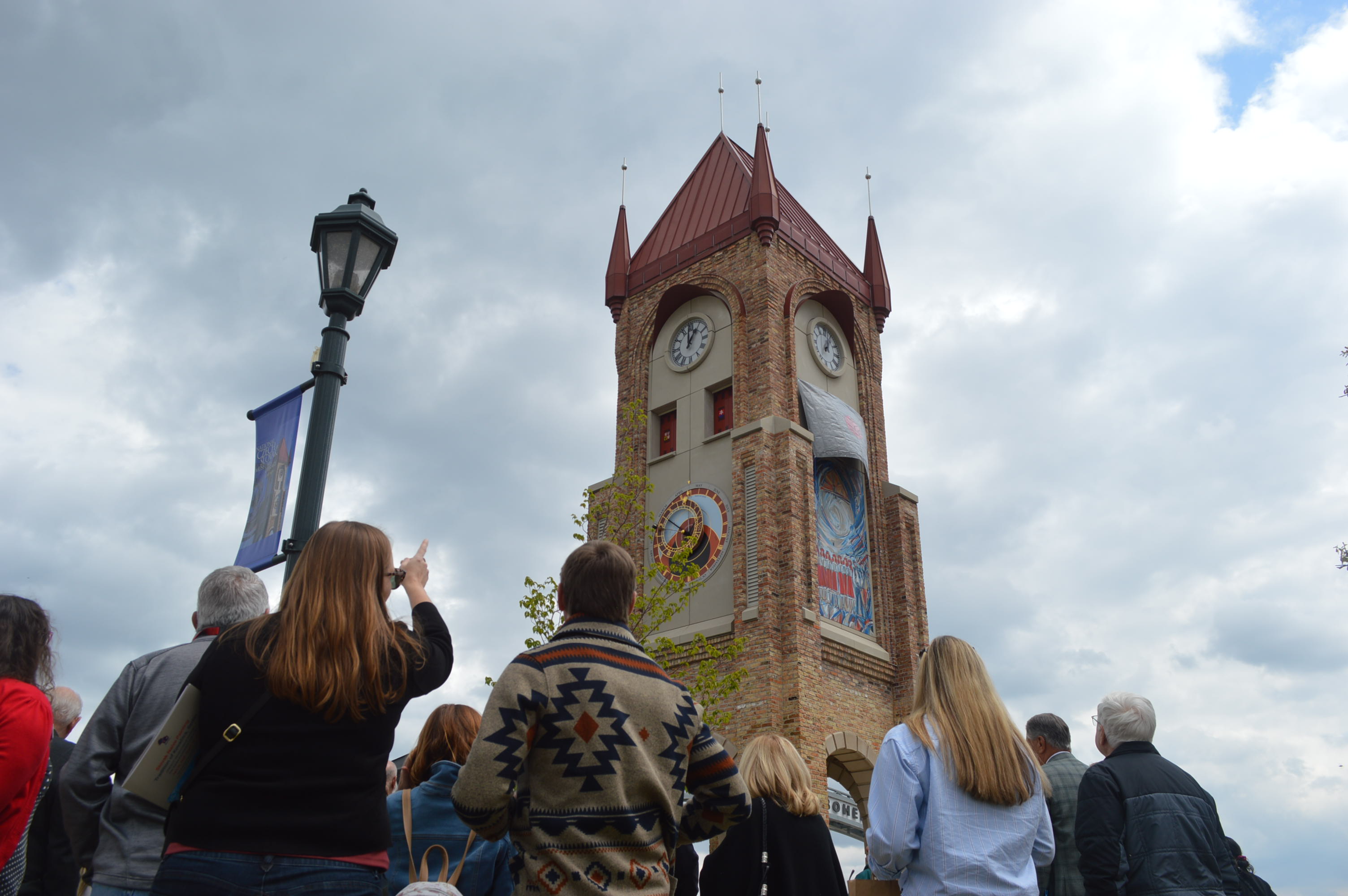
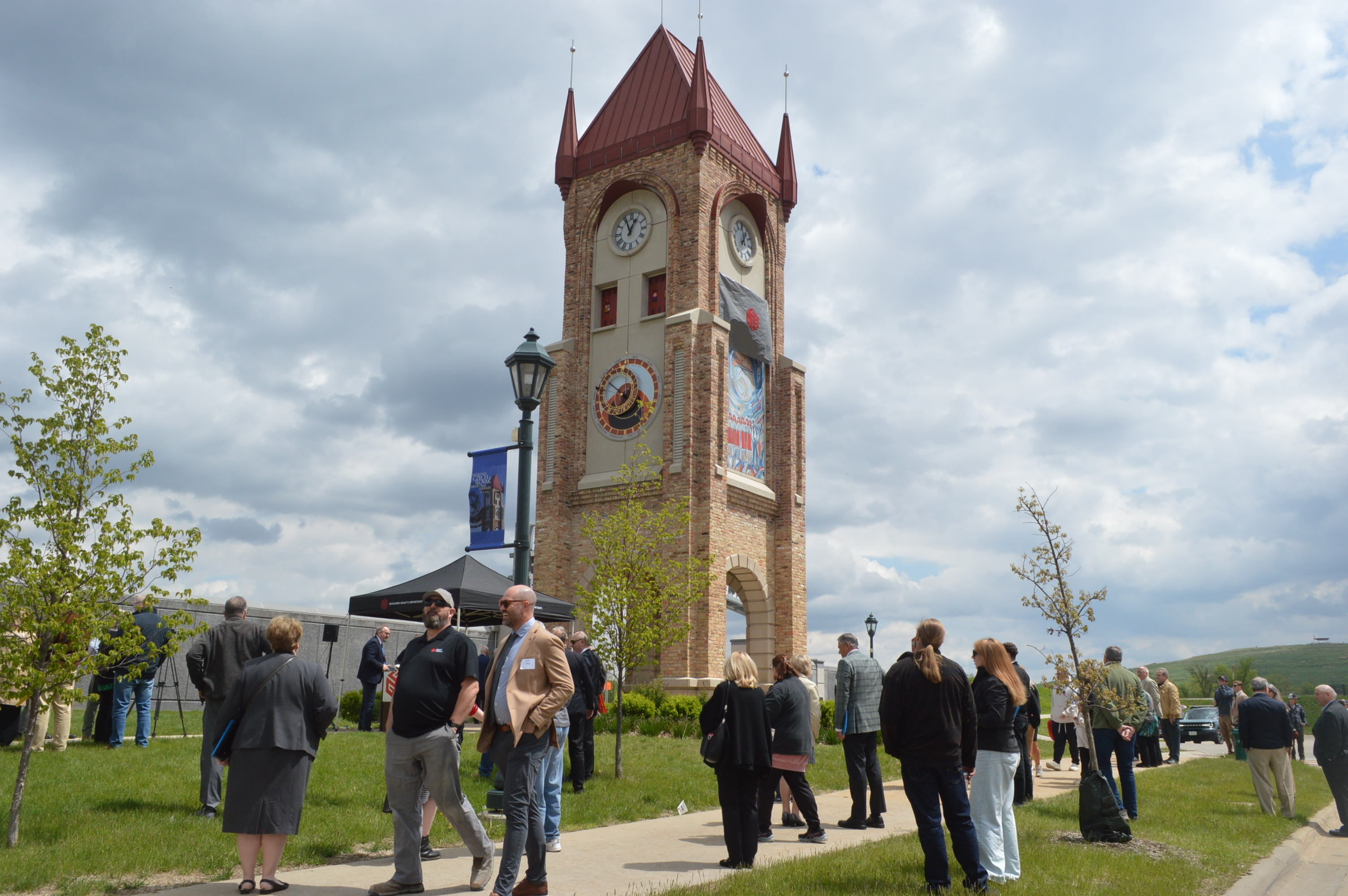
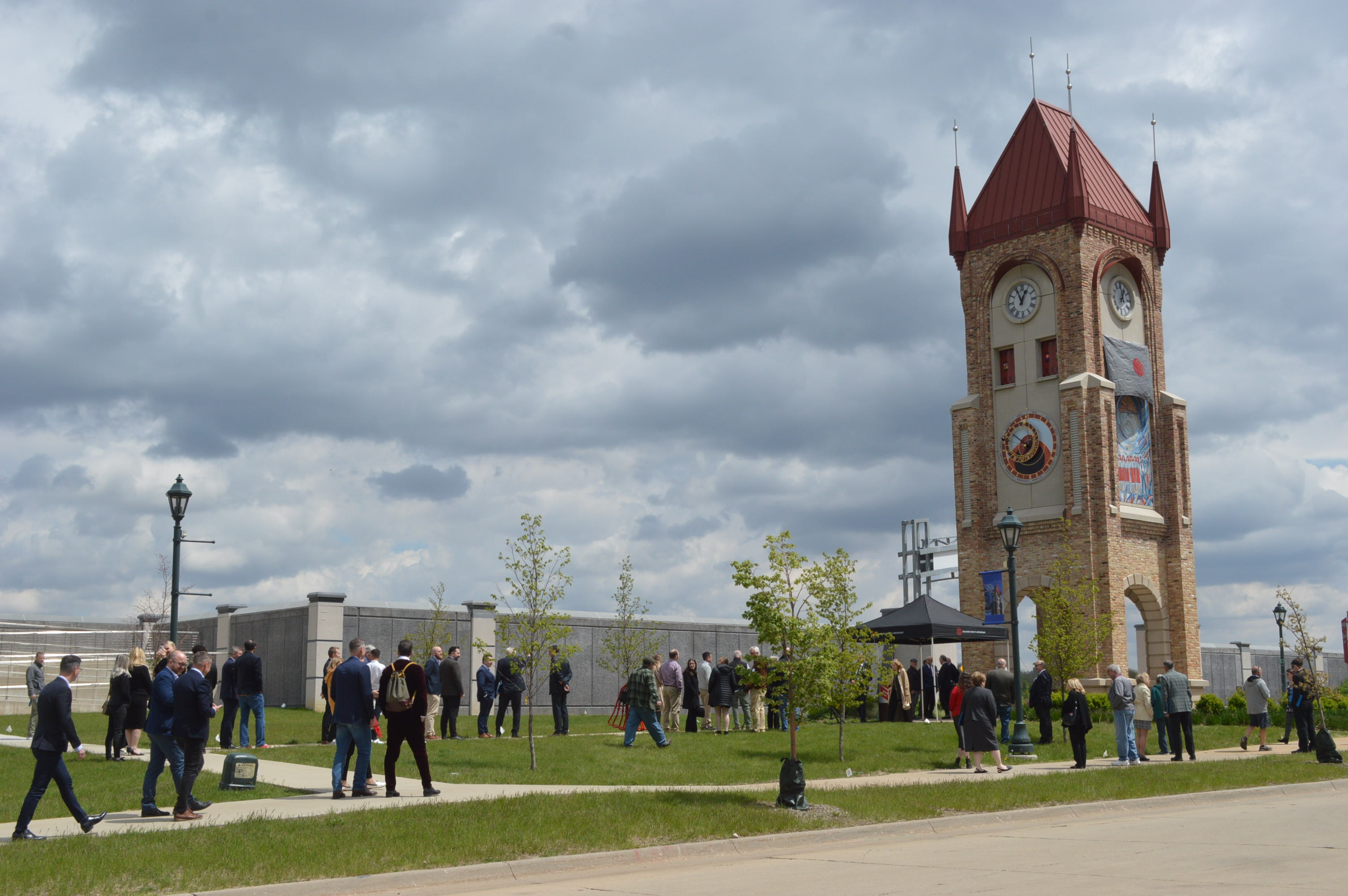
Dozens of visitors and family members of donors gathered Friday, May 1, 2026, along with dignitaries as the angels, made of Carrara marble from Tuscany, Italy, were revealed on two sides of the clock tower.
Slovakian artist Andrej Haršány, who created the clock tower’s figurines, also sculpted the angels, each weighing nearly 1,000 pounds.
The clock tower itself was dedicated in September 2024 as part of the 50th anniversary of the National Czech & Slovak Museum & Library, with Slovak President Peter Pellegrini and Czech President Petr Pavel in attendance.
Friday’s event was part of the museum’s Third Annual Economic Summit, attended by dignitaries from the Czech Republic and Slovakia, along with city and state business leaders.
Related: Two presidents dedicate Czech Village clock tower
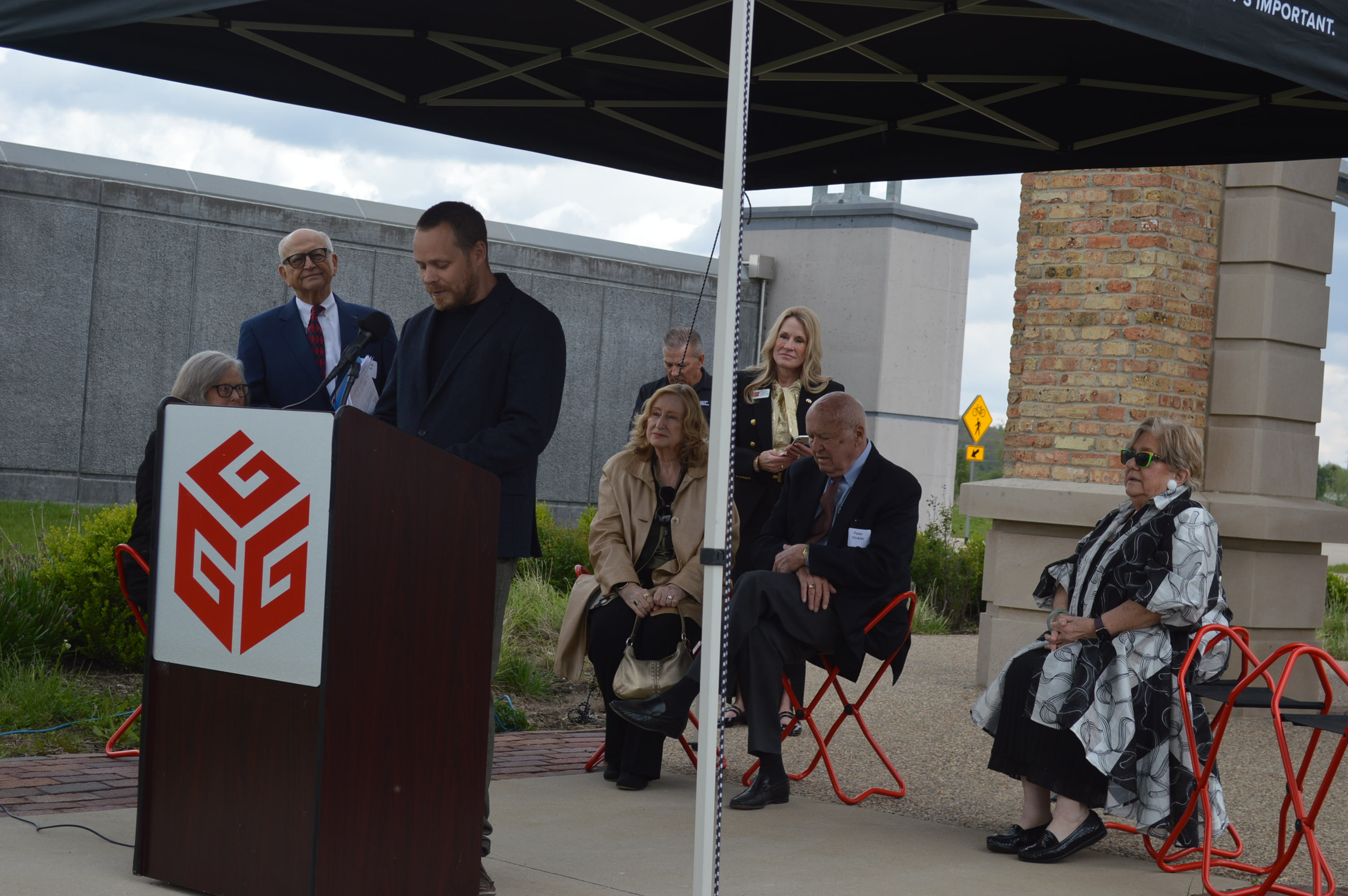
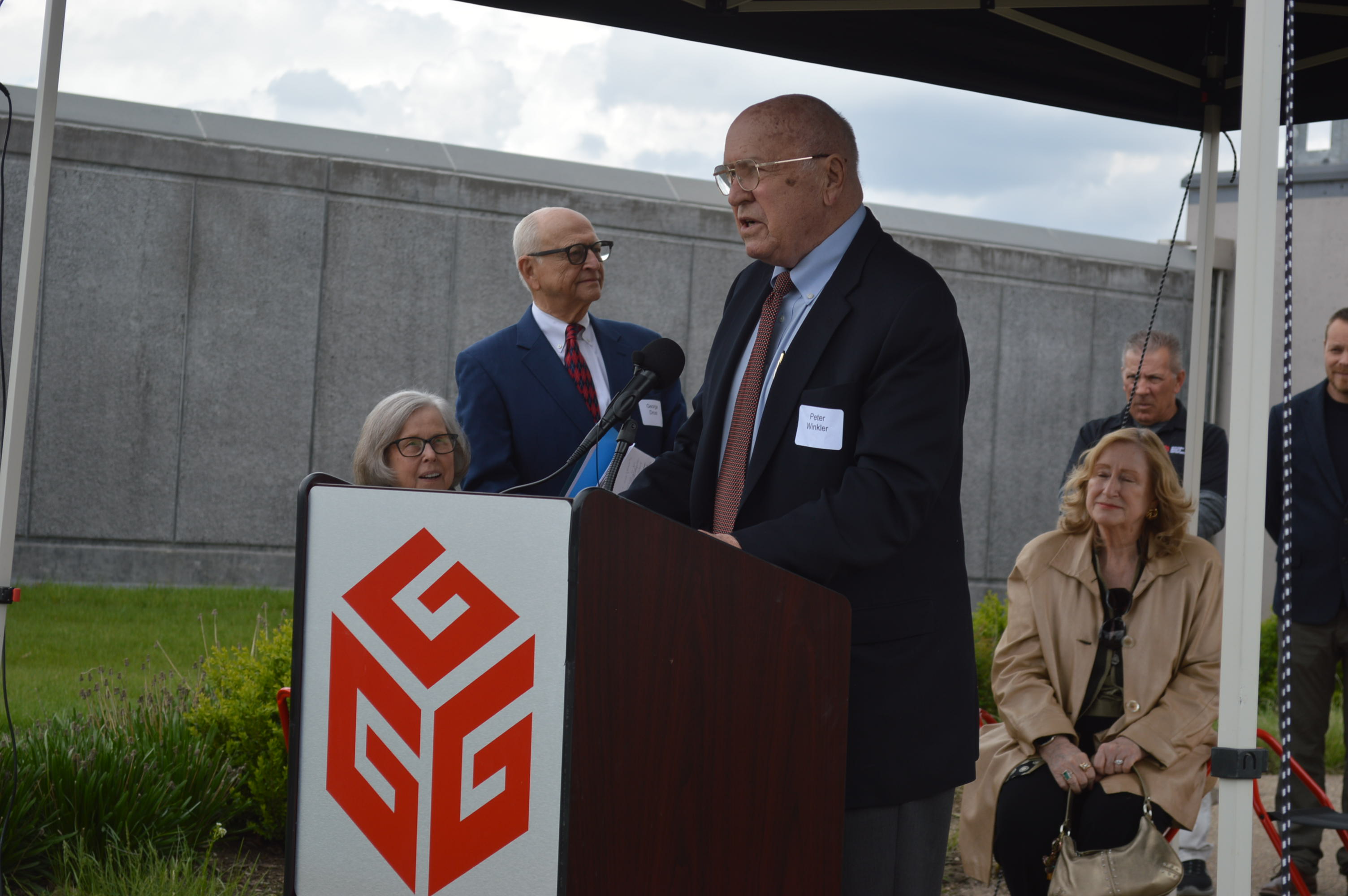
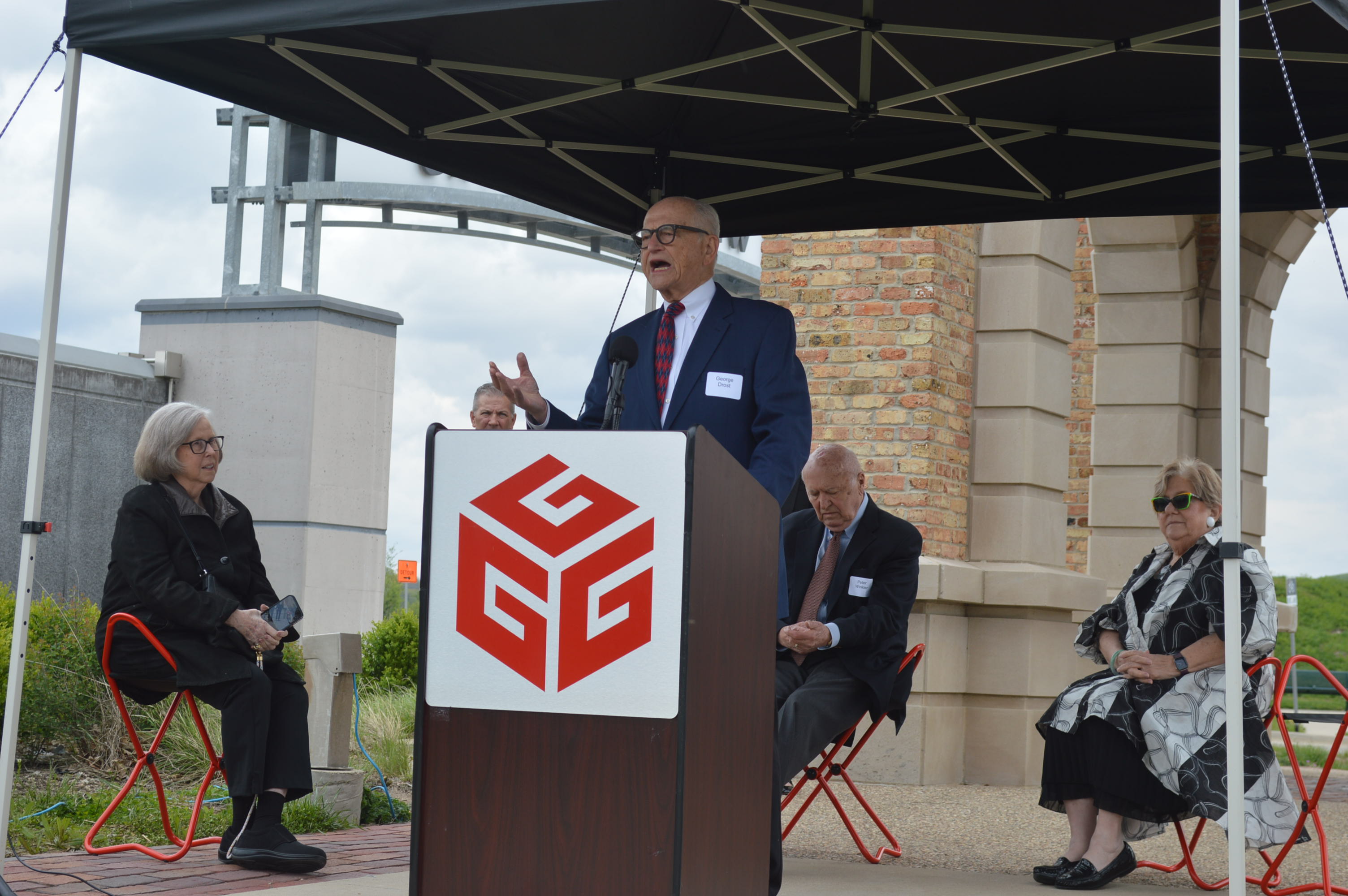
Slovakian artist Andrej Haršány speaks during the dedication of the angels on the Buresh Immigration Clock Tower. (photo/Cindy Hadish)
“I’m glad I can bring the vision into life,” Haršány said during the ceremony, citing the gleaming white marble that will capture attention on the tower. “The angels will turn the Buresh Immigration Clock Tower into a lighthouse.”
The crowd watched as the angels were unveiled on a cool and cloudy spring day. The Prague-style astronomical clock, or orloj, is the only one of its kind in North America.
Museum President and CEO Cecilia Rokusek said the angels will watch over Czech Village and the Bridge of Lions.
“These angels remind us of our immigration story,” she said. “They remind us that every life is special.”
The angels are named in memory of George Drost’s mother, Dobroslava, or Doris, overlooking Czech Village, and Peter Winkler’s mother, Sylva, or Sylvia, looking toward New Bohemia.
Both families knew each other decades ago in Brno, a city in what is now the Czech Republic.
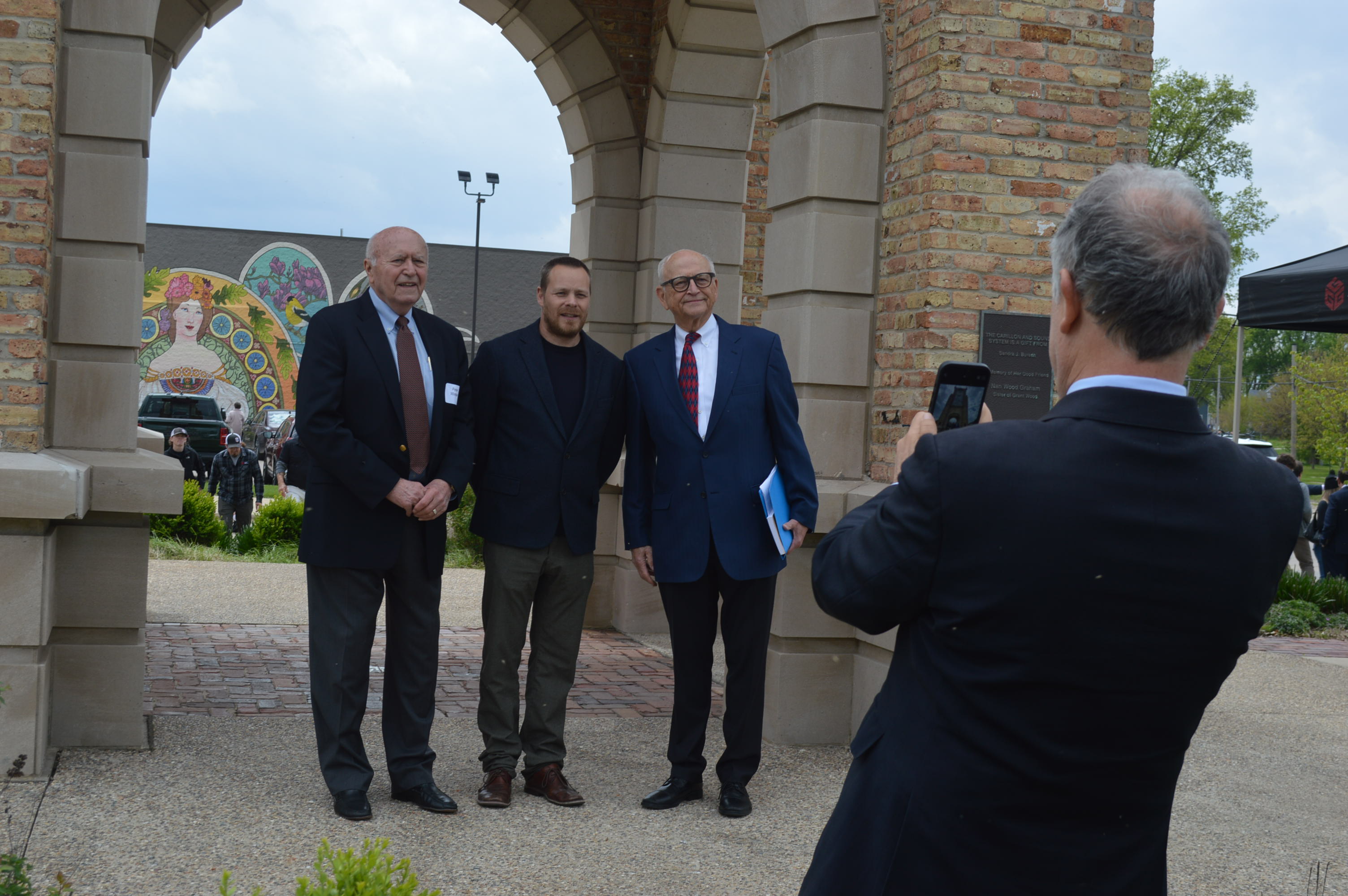
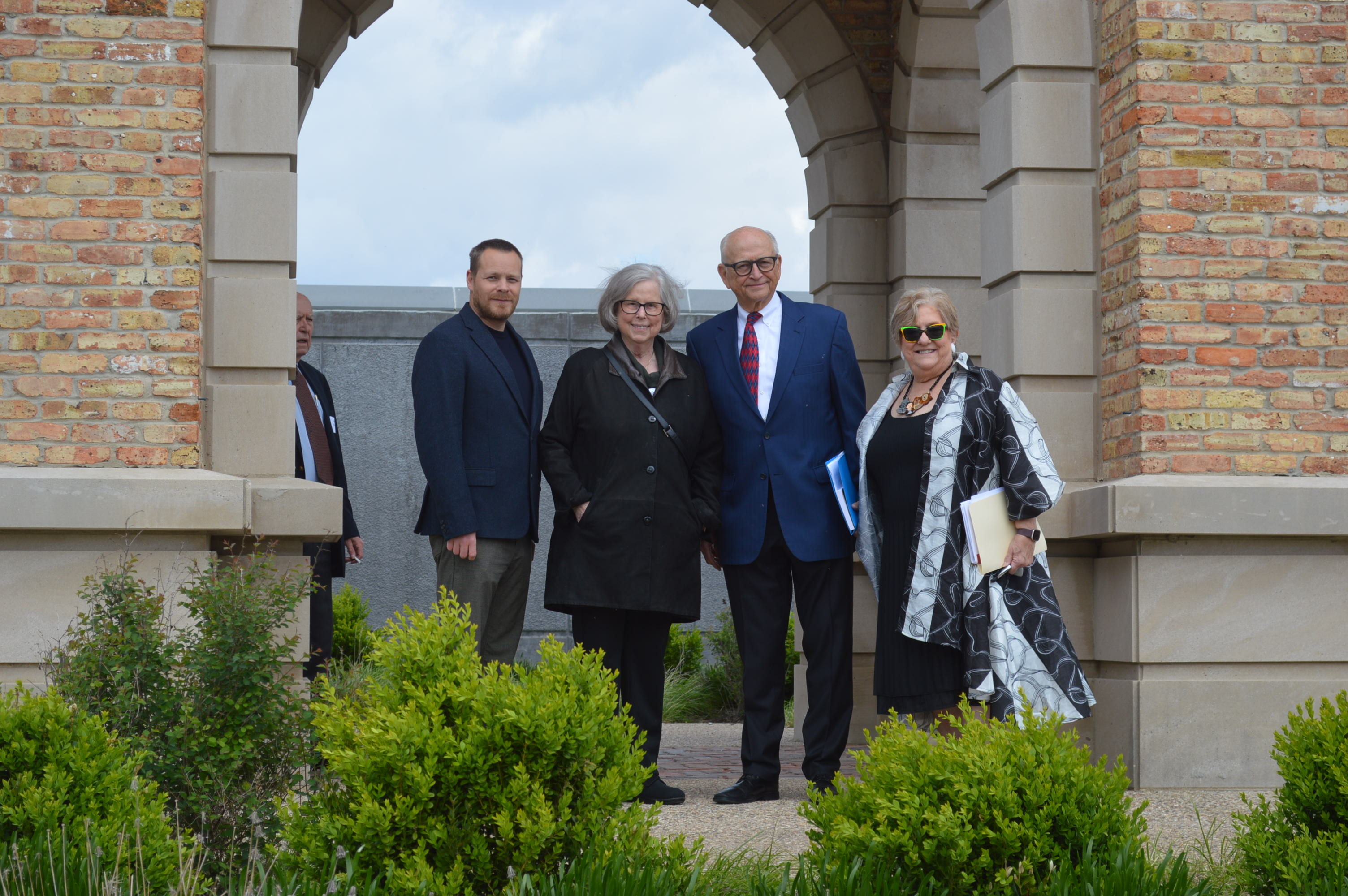
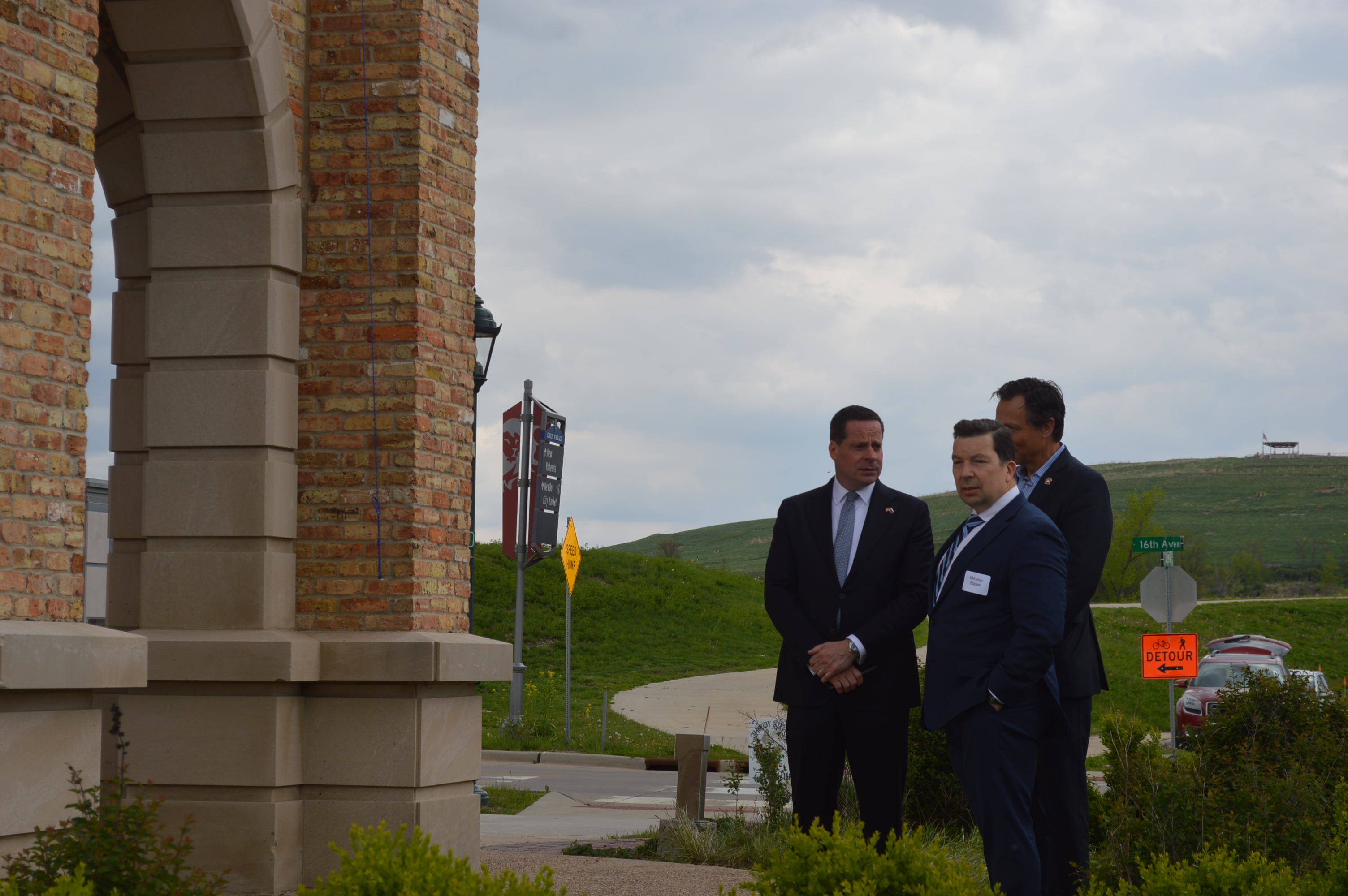
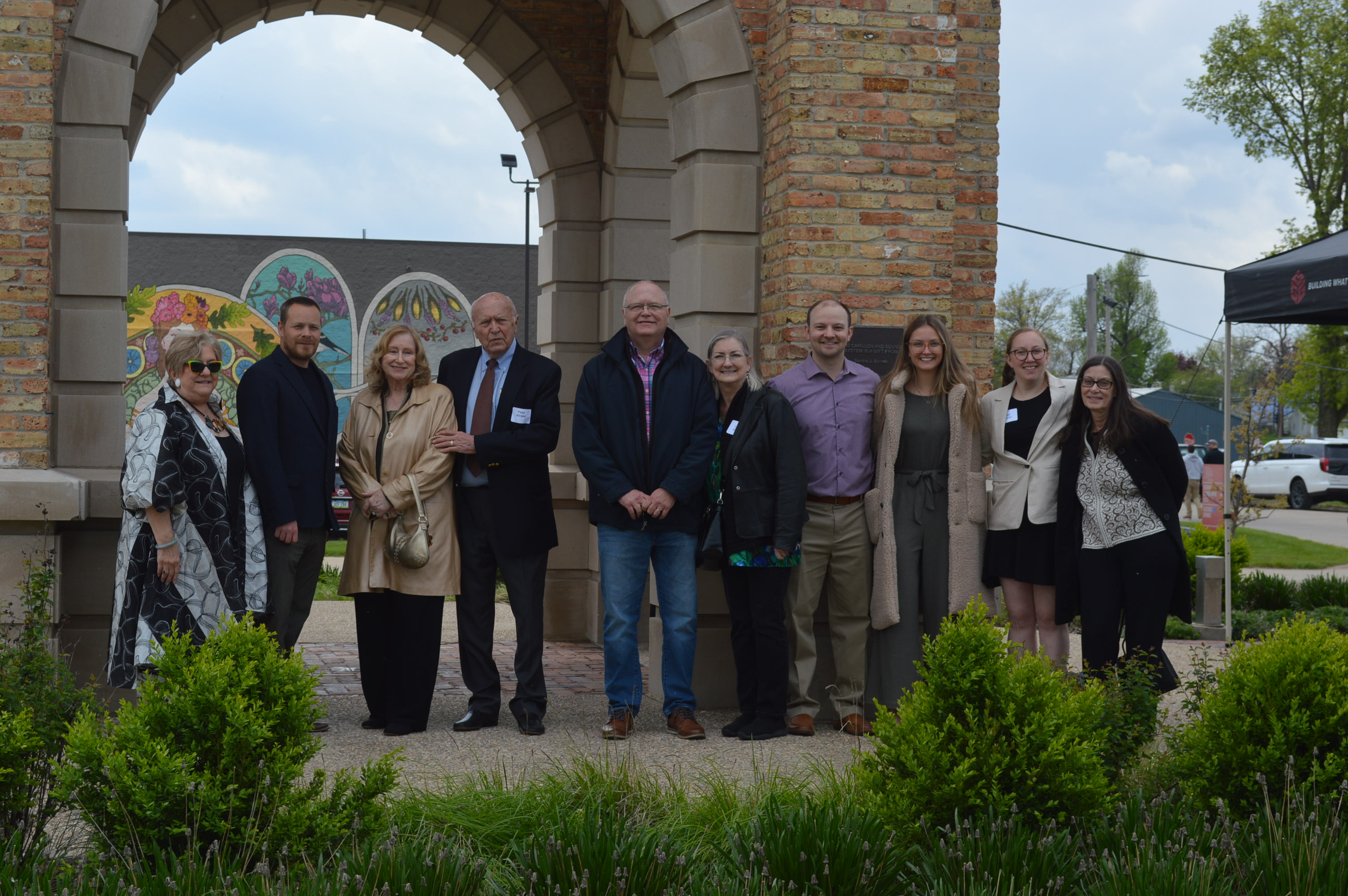
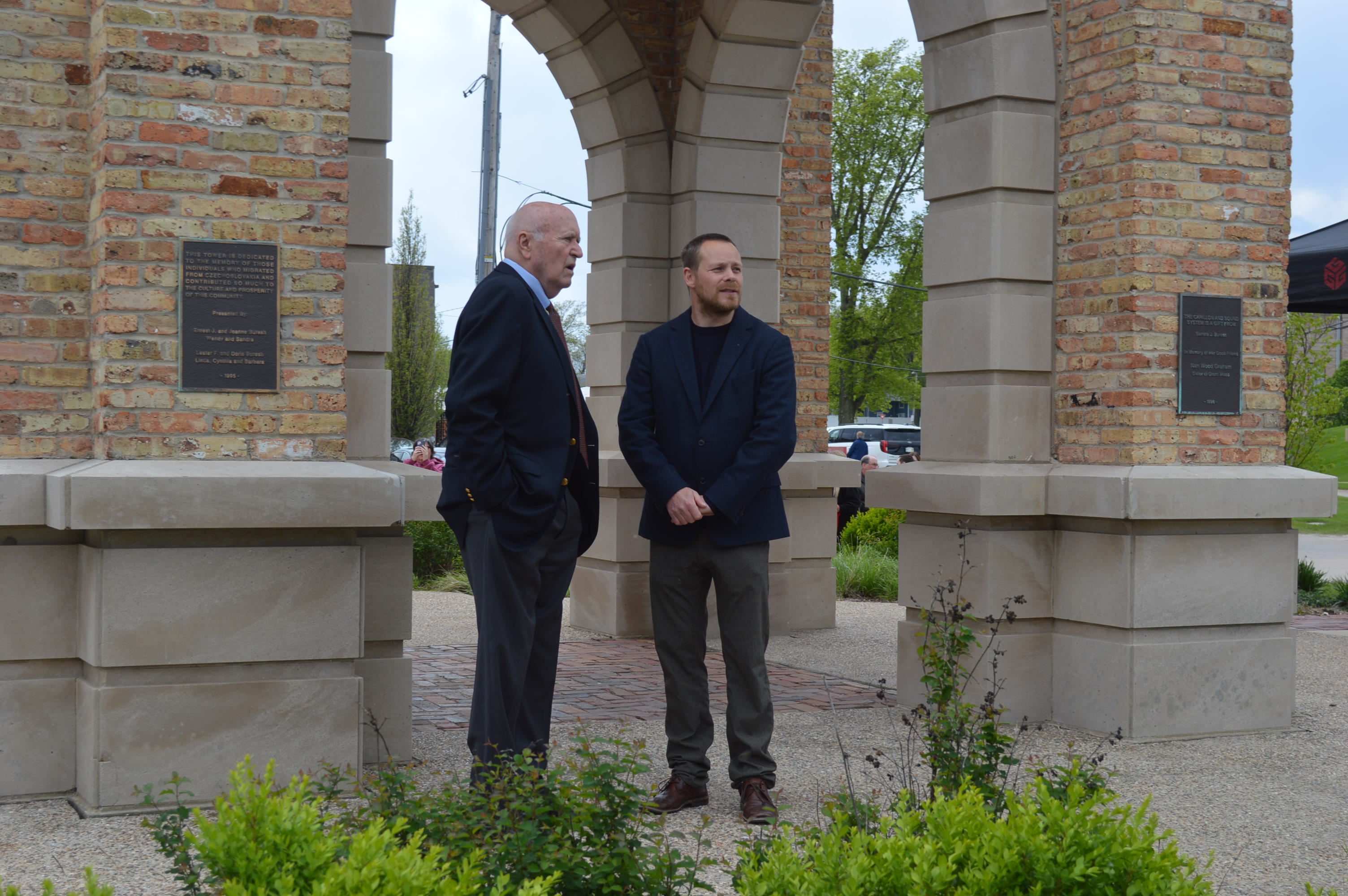
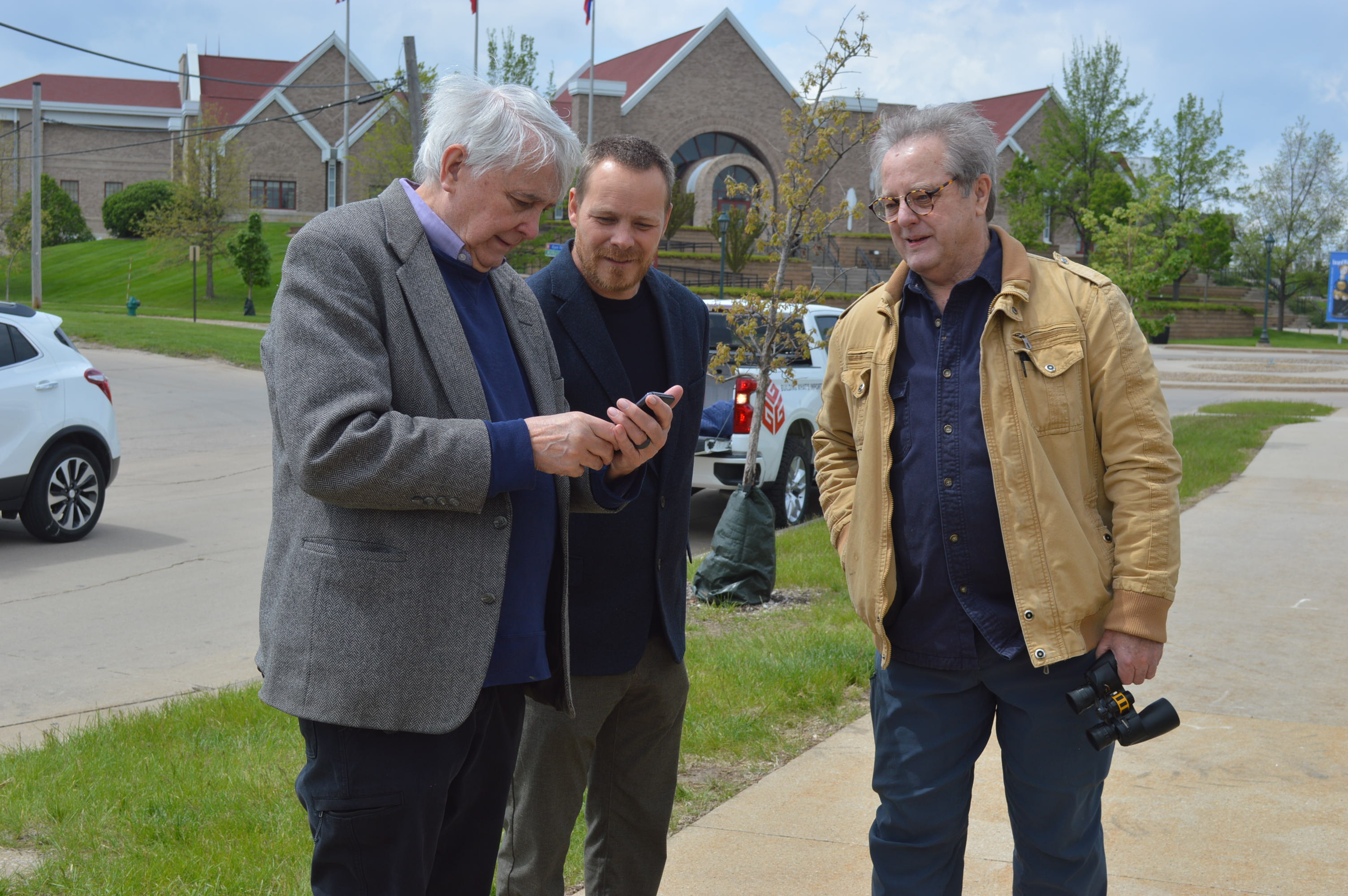
Peter Winkler, left, artist Andrej Haršány, center, and George Drost, right, pose for a photo under the clock tower after the dedication ceremony. (photo/Cindy Hadish)
Winkler said his mother would put a mixing bowl on his head and take him to the basement to survive when sirens would sound during bombings in World War II.
“She was a survivalist,” he said.
Drost said his mother assimilated after immigrating to the United States.
“I look at this tower as a monument to liberty,” he said, welcoming immigrants, similar to the Statue of Liberty. “We think of this as our Midwest model of liberty.”
Twelve figurines on the clock tower emerge on the hour, between 9 a.m. and 9 p.m., depicting the stories of Czech and Slovak immigrants in the United States who went to work on farms, coal mines and meat packing plants, and brought their heritage through music, dance, clothing and faith.
The astronomical clock displays the date, time, position of the sun on the horizon, phase of the moon, and positions of the zodiac constellations based on the tower’s coordinates, with the 12 immigrant figures rotating to music from Czech composers Bedrich Smetana and Antonin Dvorak.
In 2024, the museum renovated the clock tower, built in 1995, to include an astronomical clock modeled after the famous Prague Orloj — the oldest functioning astronomical clock in the world dating back to the medieval 15th century.
Graham Construction and Neumann Monson Architects managed the logistics of the project.
See inside the clock tower with the Slovakian artist and more photos from the dedication, below:
No Comments Yet