
CEDAR RAPIDS, Iowa — Opponents of the proposed Morgan Valley Energy Center have approached the Cedar Rapids City Council about its role in the project, even as many of them are not allowed to speak at council meetings.
Alliant Energy plans to build the 720-megawatt, natural gas power plant near the corner of Highway 30 and the Linn-Benton Road.
While the site is not within city limits, advocates with Save Morgan Valley, a grassroots community organization, asked during the May 26, 2026, City Council meeting for council members to consider the repercussions of the nearby plant.
But many were unable to address the council, which is limiting speakers to Cedar Rapids residents, business owners or property owners, and has reduced the amount of time to speak from five minutes to three.
Related: Alliant’s gas-fired power plant met with blowback
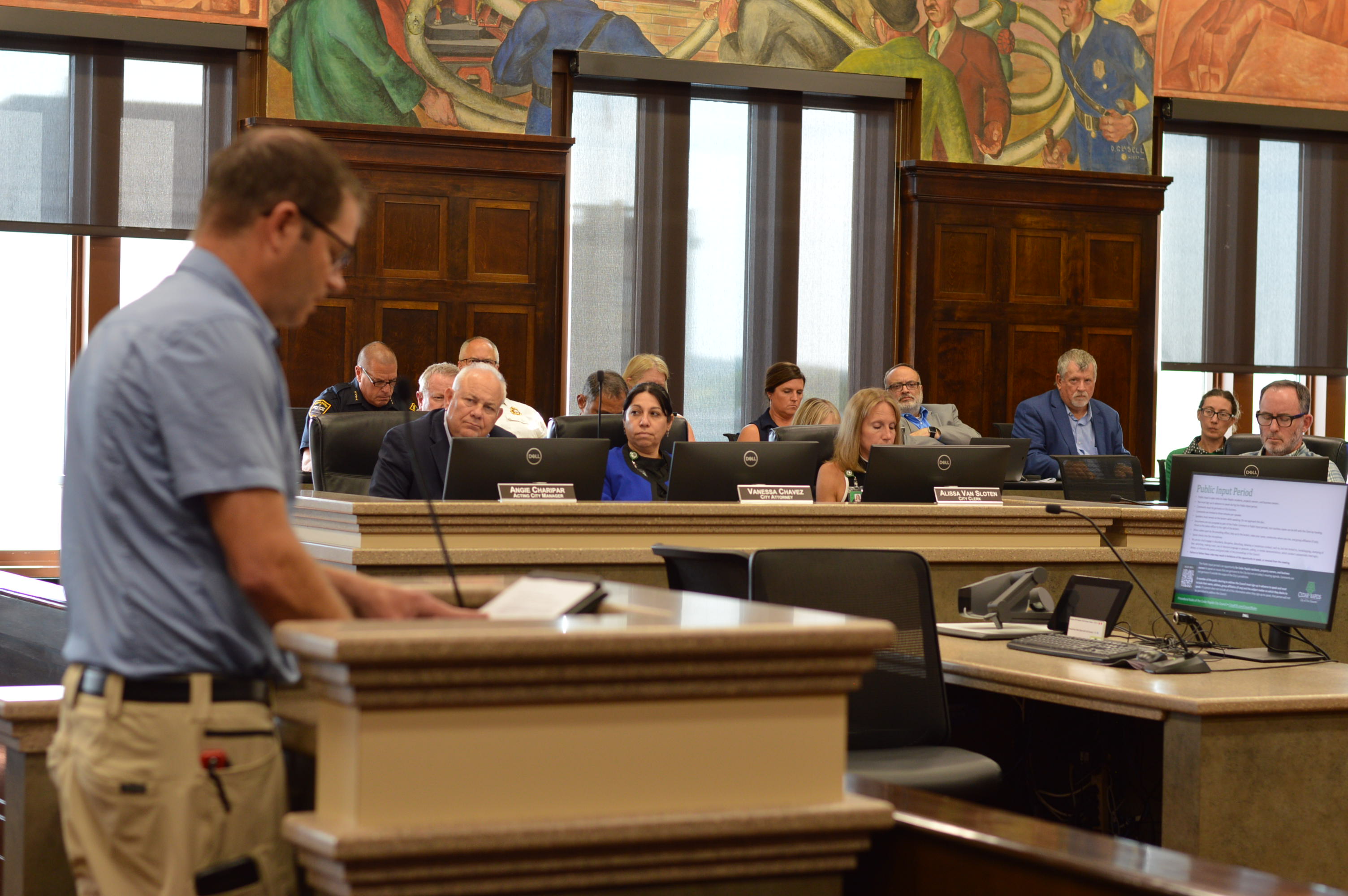
The meeting agenda did not include anything about the power plant, but Jon Lee, who owns a small business located in Cedar Rapids, and lives less than a mile from the proposed plant, spoke during the public comment period, along with two other Morgan Valley advocates.
“People have not been kept in the loop,” Lee said, referencing the council’s policy limiting who can address the City Council. “The people with the most to lose are not allowed to speak tonight.”
He also asked whether the City Council had signed any confidentiality agreement related to the project and the development around it.
Data centers are under construction in that area of Cedar Rapids.
Lee noted that application materials, agency communications, and the Iowa Utilities Commission docket “point to coordination already underway involving water service, sewer service, treatment-capacity planning, utility coordination, permitting preparation, and broader infrastructure planning, including Cedar Rapids Utilities discussions referenced in the project materials.”
“If these agreements are in place, the public has a right to know,” he said.
Mayor Tiffany O’Donnell said in an email that she has never signed a non-disclosure agreement with Alliant Energy “regarding this project or any other project.”
Julie Witting, a Cedar Rapids resident who also lives within one mile of the proposed plant, asked the City Council to conduct water studies and for the council to impose a moratorium, adding that the site is close enough to The Eastern Iowa Airport that “planes fly very low over there.”

Julie Witting, left, and Jon Lee speak to Mayor Tiffany O’Donnell after the May 26 Cedar Rapids City Council meeting. (photo/Cindy Hadish)
“It’s something we need to slow down,” Witting said, citing carcinogens and other potential health risks from the plant.
Jane Scheer of Cedar Rapids also cited water concerns and noted that other advocates would have spoken had they been allowed to.
“Everyone deserves the right to speak whether they reside in the city limits or not,” said Scheer, who spoke to City Council member David Maier after the meeting, with other Morgan Valley advocates.
Lee spoke to O’Donnell after the meeting, noting he had sent an email to her that she did not respond to, but that she forwarded to Alliant Energy.
O’Donnell said in an email that she forwarded the message to Mayuri “May” Farlinger, president of Alliant’s Iowa energy company, because “I felt it best to connect him directly with the decision makers at Alliant.”
She noted that the city relies on Linn County Public Health to conduct air quality monitoring and Cedar Rapids commissioned an independent study by Black & Veatch to evaluate the city’s water system’s capacity and quality as it relates to future growth and development.
“The purpose of that study is to provide objective, science-based information that can be applied to any future project that may seek water service, regardless of the applicant,” O’Donnell wrote. “The City would rely on the findings of that study when evaluating any future requests.”
She also noted that the proposed power plant is located in Linn County and falls under county jurisdiction, and as such, “the county is the primary governmental entity responsible for the review and approval process.”
Lee cited the importance of Alliant representatives listening to the public.
When asked about any planned public meetings, an Alliant spokesman sent the following email: “As we work to submit our complete air permit application to LCPH and have new information to share, we will look for opportunities to share updates and keep the community informed.”
Lee requested that the city schedule a public work session or a regular council agenda item with dedicated public comment time, focused specifically on the role Cedar Rapids plays in water service commitments, sewer capacity, infrastructure coordination, long-term utility planning, and the broader regional implications associated with the Morgan Valley Energy Center and surrounding industrial development.
He asked that residents within the 10-mile impact area be allowed to speak regardless of whether they reside within Cedar Rapids city limits, since the effects extend beyond jurisdictional boundaries.
Lee noted that “the public discussion appears to be well behind the level of planning, coordination, infrastructure preparation, and regulatory activity already taking place.”
O’Donnell responded by email, encouraging anyone with concerns to share them directly with Linn County and Alliant Energy.
“It’s also important to recognize that if a project were to move forward, there may be other options for securing water beyond City services, including private wells or other arrangements,” she wrote.
The Alliant spokesman sent the following statement when asked about environmental concerns; the permitting process; the city’s role and the role of new data centers in the perceived need for a new power plant:
“The Morgan Valley Energy Center represents an important step in strengthening the energy system that communities depend on today and into the future. As we move this work forward, we remain focused on delivering reliable, cost-effective service for customers while meeting, and often exceeding, all regulatory standards that protect public health and the environment, building on our proven track record.
Alliant Energy is required to provide safe, reliable energy to all customers we serve. We are seeing an increase in demand within our service territory, and additional generation is needed to maintain a secure electric grid. Some of this growth is from data centers, but also from the expansion of manufacturing facilities and other economic development activities. Importantly, we do not build generation for specific customers. Instead, we plan for overall system needs and maintain sufficient capacity, plus a reserve margin, to reliably serve demand now and into the future.
We follow a straightforward principle: customers who use more energy are responsible for the costs required to serve them. Regulatory oversight ensures that large energy users pay their fair share for the infrastructure needed to support their demand, so those costs are not shifted to other customers. Importantly, Alliant Energy has committed to keeping electric base rates stable through the end of the decade for Iowa customers.
Regarding Morgan Valley Energy Center and the environment, we are at the beginning of a rigorous, multi-layered permitting and review process. Linn County Public Health (LCPH) and the Iowa Department of Natural Resources (DNR) will evaluate detailed air-quality modeling to ensure the facility meets all applicable state and federal standards. Once our final air permit application is submitted, it will be available for review within the Iowa DNR’s air permitting database.
By law, any proposed facility must demonstrate compliance with strict, health-based environmental standards established by the U.S. Environmental Protection Agency and implemented locally on behalf of the Iowa Department of Natural Resources. We expect that LCPH and Iowa DNR will hold a public hearing so individuals can provide input once a draft air permit is available. Additionally, LCPH recently updated their blog with new resources. We recommend you reach out to them to learn more information about their permitting process.
Lastly, The City of Cedar Rapids does not have a formal role in the approval process, but we continue to work with local communities, including Cedar Rapids, to keep them apprised of the project.”
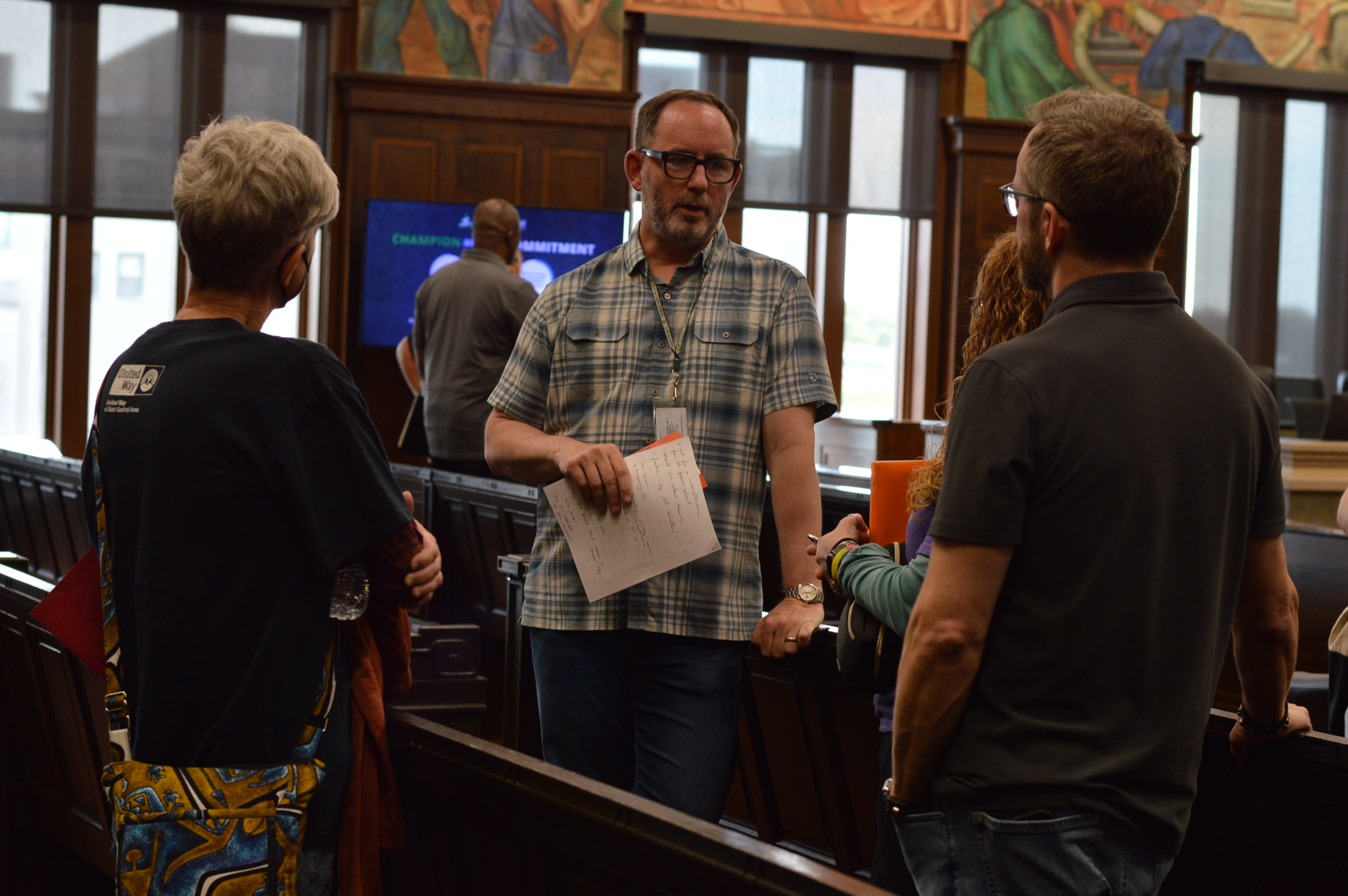
Cedar Rapids City Council member David Maier, center, speaks with Jane Scheer, left and other Save Morgan Valley advocates after the May 26 City Council meeting. (photo/Cindy Hadish)
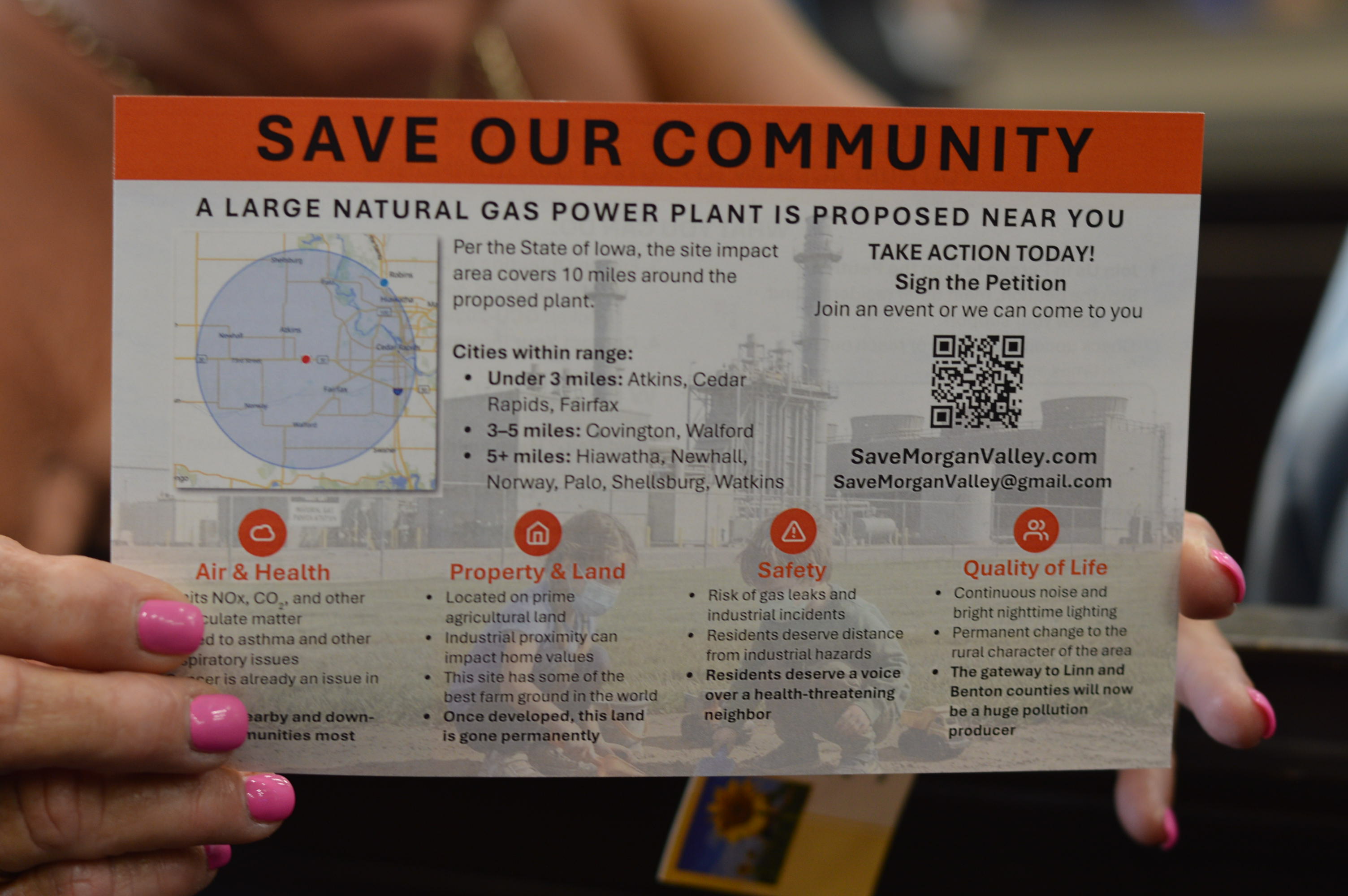
In a press release, Save Morgan Valley noted the project raises serious concerns about air quality, public health, environmental impacts, rural development and the future of surrounding communities.
“What began as a local response from nearby residents has quickly grown into a broader regional movement focused on protecting farmland, wildlife habitats, water resources, and the health and quality of life of local families,” the news release said.
Save Morgan Valley has been actively organizing petition drives, educational outreach, public meetings, and community events to inform residents about the proposed project and encourage participation in the Iowa Utilities Commission review process.
The organization noted many residents remain concerned about:
· Air pollution and emissions associated with fossil fuel infrastructure
· Health impacts tied to industrial emissions
· Increased industrialization in rural areas
· Noise and light pollution affecting nearby homes and residents
· Water consumption demands from large industrial facilities
· Impacts on wildlife and local ecosystems
· Long-term changes to the landscape and quality of life in the region
Organizers say residents living in the 10-mile impact zone are especially concerned about how industrial emissions and around-the-clock operations could affect children, older adults, and individuals with asthma or other underlying health conditions.
The group is encouraging local governments and residents to engage directly in the regulatory process and ensure community concerns are part of the public record by submitting opposition to the Iowa Utilities Commission at EFS.iowa.gov under docket number GCU-2026-0002.
More information, upcoming events, petition opportunities, and Iowa Utilities Commission filing instructions can be found at savemorganvalley.com
No Comments Yet